
What You Need to Get Married at the Courthouse

Updated: Sep 26

To get married at the courthouse, you need a valid marriage license (or an approved application in progress), government-issued photo ID for both people, proof that any prior marriage legally ended, payment for license and ceremony fees, and witnesses if your state requires them. That’s the whole list at its core. Everything else, from waiting periods to certified copies, builds on those five items.
Here’s the checklist version to work from before you dig into the details:
Valid marriage license issued by the county where the ceremony happens
Government-issued photo ID for both applicants (driver’s license, passport, or military ID)
Certified divorce decree or death certificate if either person was married before
Cash or approved payment method for license and ceremony fees
One or two adult witnesses, depending on your state’s rules
Confirmation of your county’s waiting period and appointment requirements
Pro Tip: Ask the clerk’s office about the license return deadline before your ceremony date, not after. Some counties require the officiant to file the signed license within 10 days. Miss that window and you’ll be stuck waiting on certified copies you need for Social Security or DMV paperwork.
Key Takeaways
Getting married at the courthouse comes down to five things: a valid license, proper ID, proof of prior marriage termination if applicable, payment, and witnesses when your state requires them.
Point | Details |
Apply early | Submit your license application 1 to 2 weeks before your ceremony to account for waiting periods. |
Bring certified documents | Photocopies of divorce decrees or death certificates are usually rejected; bring certified originals. |
Confirm witness rules | States require 0, 1, or 2 witnesses; ask if clerk staff can fill in when needed. |
Track the filing deadline | Some counties, like Cook County, require the signed license returned within 10 days. |
Get help with document prep | Harris & Charms assists with verification, attestation, and appointment coordination for couples navigating certified paperwork. |
Your county clerk’s office remains the final authority on every rule mentioned here, so confirm specifics before your appointment.
Table of Contents on how to get married at the courthouse
What Documents Do You Need for a Courthouse Wedding?
Every clerk’s office wants proof of who you are and, if applicable, proof that you’re legally free to marry again. The specifics vary by county, but the categories are consistent nationwide.
Photo identification tops the list. A driver’s license, state-issued ID card, valid passport, or military ID all typically work, and the clerk will check that your date of birth confirms you meet the minimum age requirement. A handful of counties will accept a certified birth certificate if you don’t have photo ID; though this is increasingly rare and worth confirming ahead of time. Most application forms also ask for your Social Security number, but you generally don’t need to bring the physical card.
If either partner was married before, bring the original or a certified copy of the divorce decree, annulment order, or spouse’s death certificate. A photocopy usually won’t cut it. Clerks want to see the court seal or an official stamp confirming the document is authentic, not something printed at home.
Foreign documents add another layer. If your divorce decree or birth certificate was issued outside the U.S., some counties require a certified translation, notarization, or an apostille before they’ll accept it. Requirements differ enough county to county that a quick call ahead saves a wasted trip. Couples navigating cross-border paperwork often find it easier to have documents reviewed before arrival, which is where a detailed documents guide can help clarify what’s needed before you show up.
Virtually every U.S. state has dropped mandatory blood tests and medical exams for marriage licenses. If you’ve heard otherwise, that requirement is outdated in nearly all jurisdictions today, though it never hurts to confirm with your specific county.
Who Can Get Married at the Courthouse and What Does It Cost?
Eligibility rules are straightforward on paper: you need to meet your state’s minimum age (usually 18 without parental consent, younger with it in some states), and you can’t already be legally married to someone else. States handle exceptions for minors differently, so check local law directly if age is a factor for either partner.
Fees run modestly compared to venue weddings. Marriage license application fees vary by jurisdiction but commonly fall within a low to moderate range, and some offices reduce the fee if you’ve completed an approved premarital education course. Waiting periods add another variable. Some counties let you use the license the moment it’s issued. Others impose a mandatory wait of 24 to 72 hours between issuance and ceremony. Florida, for example, requires a three-day wait for residents unless they’ve finished a state-approved premarital class.
Applying is usually a two-step process now. Many counties, including Montgomery County, Pennsylvania, let you start the application online and finish the process through a video conference like WebEx rather than requiring an in-office visit for every step. Others, like Alachua County, Florida, require you to review a family law handbook online, submit the application digitally, and then appear together in person to finalize issuance. Either way, plan to apply well ahead of your ceremony date.
Confirm your state’s minimum age and consent rules before applying
Budget $20 to $120 for the license fee, plus a separate ceremony fee if the clerk performs it
Ask whether a premarital course discount or waiting-period waiver applies in your county
Apply at least one to two weeks before your intended ceremony date
Verify whether your county allows a remote finish or requires full in-person processing
Pro Tip: If you took a state-approved premarital education class, bring the completion certificate to your appointment. In states like Florida, it can waive the standard waiting period entirely and let you marry the same day you apply.
Who Needs to Be There: Witnesses and the Officiant
A courthouse wedding is officiated by a judge, magistrate, justice of the peace, or authorized county clerk, and the ceremony they perform is just as legally binding as any religious service. What differs from state to state is who else needs to stand in the room with you.
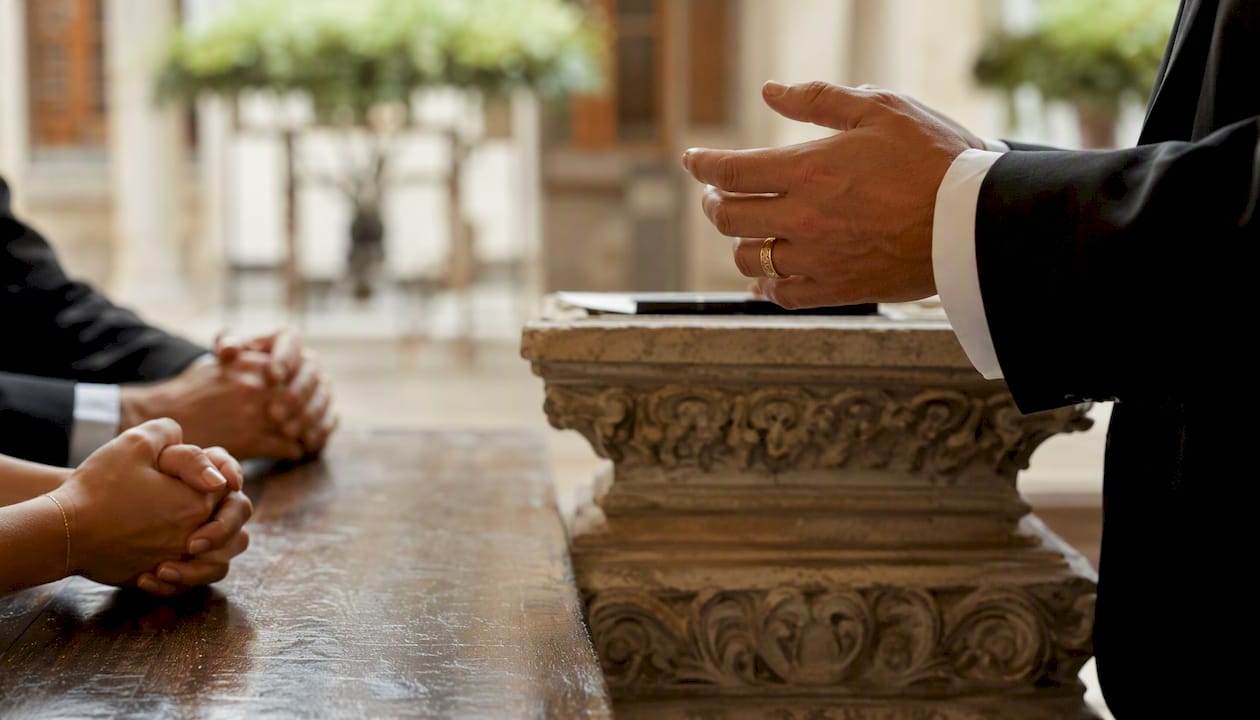
Witness requirements split into three general categories. Some states require none at all, letting the officiant and couple sign without any third party present. Others require one adult witness, and a smaller group requires two, typically both age 18 or older. If you show up without anyone lined up, don’t panic. Many clerk’s offices keep staff on hand who can step in as witnesses, and some couples have simply asked another pair waiting for their own ceremony to return the favor.
Once vows are exchanged, the paperwork moves fast. The officiant signs the license, both spouses sign, and any required witnesses add their names and signatures in the designated fields. The officiant is typically the one responsible for returning that signed document to the clerk for official recording, not the couple.
Confirm whether your state requires 0, 1, or 2 witnesses before your appointment
Bring your own witnesses if possible rather than relying on availability
Ask the clerk in advance whether staff witnesses are offered as a backup option
Double check that witnesses meet the minimum age requirement, usually 18
What Happens on the Day of the Ceremony
Courthouse ceremonies move quickly, but the process still has distinct steps you should expect to walk through in order.
Arrive early. Most courthouses run security screening similar to an airport checkpoint, so give yourself 30 to 45 minutes of buffer before your scheduled time.
Check in at the clerk’s office or designated ceremony room. Staff will confirm your appointment or walk-in status.
Present your marriage license and photo IDs. This is the final verification step before the ceremony begins.
The officiant performs the ceremony. Civil vows are typically brief, often wrapped up in under 15 minutes.
Everyone signs the license. The officiant, both spouses, and any required witnesses add their signatures.
The clerk files the signed license for recording. You’ll usually walk away with a receipt or informal copy, not the official certified certificate.
A quick timing note worth remembering: the ceremony fee is often separate from the license fee, so budget for both. Alachua County’s clerk, for instance, charges a $30 ceremony fee on top of the license itself, and many counties follow a similar split-fee structure.
What Happens After: Filing, Certified Copies, and Name Changes
The signed license you receive on your wedding day isn’t your final marriage certificate. It becomes official only after the officiant returns it to the clerk, and every jurisdiction sets its own deadline for that return.
The officiant files the signed license. Cook County, for example, requires the signed license to be returned to the clerk’s office within a specific number of days after the ceremony, and the license itself has a limited validity period from the date it was issued. Other counties allow anywhere from a few days to a few weeks, so ask directly rather than assume.
You order certified copies once the license is recorded. Certified copies typically carry a modest per-copy fee and are what you’ll actually need for Social Security updates, DMV name changes, and employer records. A basic photocopy won’t satisfy any of these agencies.
You update your name where it matters. The Social Security Administration usually wants the process started first, followed by the DMV and then your employer or insurance provider. Each typically asks for its own certified copy, not a shared one you pass around.
If you plan to use the marriage abroad, start attestation early. Legalizing a U.S. marriage certificate for use in another country often means apostille certification, sometimes paired with a certified translation, and processing times vary widely by destination.
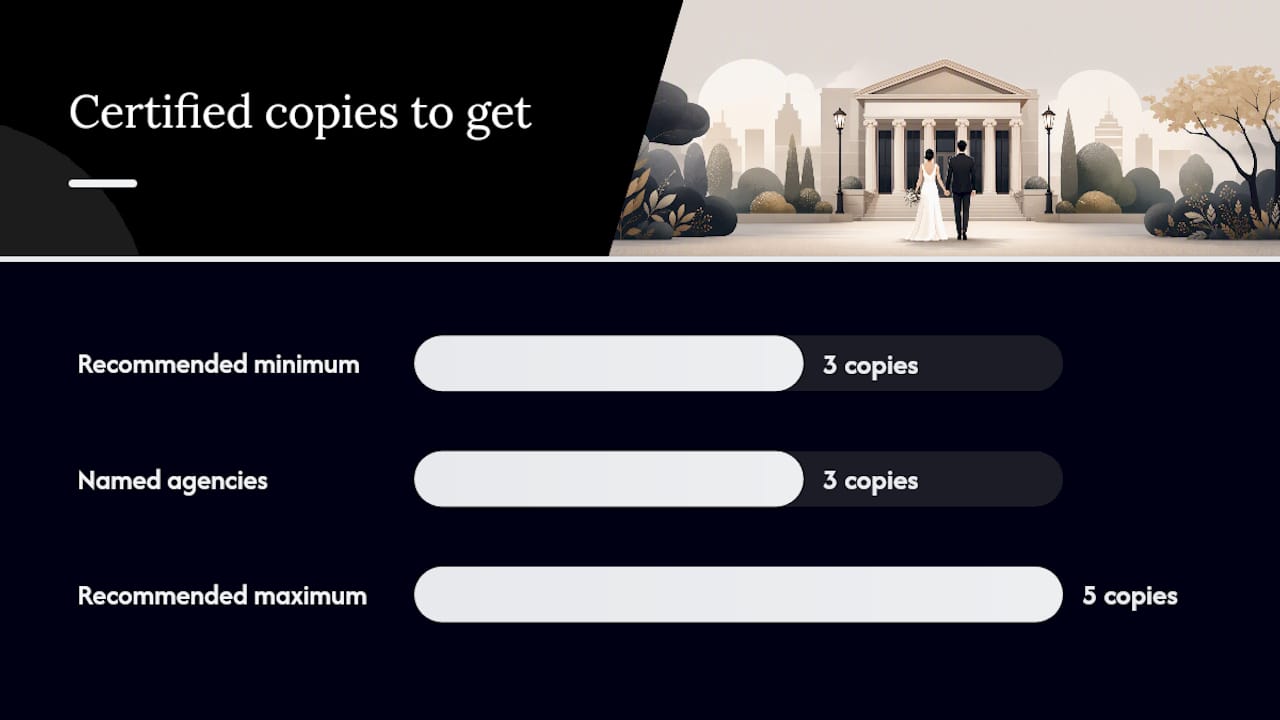
Pro Tip: Order three to five certified copies at once when you first request them. Reordering later means paying the fee again and waiting through processing delays you could have avoided the first time.
Filing deadlines aren’t uniform, and missing one can stall every downstream step, from your new driver’s license to a certificate you need attested for use overseas. Practitioners who handle this regularly stress that tracking the return window matters just as much as gathering the original documents.
Common Reasons Courthouse Marriages Get Delayed
Most delays trace back to a small set of avoidable mistakes, and knowing them ahead of time is the easiest way to skip the stress entirely.
Non-certified divorce decrees cause more rejected applications than almost anything else. A plain copy from your own files, even if it’s accurate, often won’t satisfy the clerk. Call ahead and ask exactly what format they require.
Jurisdiction mismatches trip up couples who apply in one county and try to marry in another. In most states, your license only works in the county or state that issued it, so applying where your ceremony will actually happen avoids the headache of starting over.
Payment surprises catch people off guard too. Some clerk’s offices are cash-only, and ceremony fees are frequently billed separately from the license fee itself. A quick call to confirm accepted payment methods costs you nothing and saves an awkward moment at the counter.
If you discover missing documents the day of your appointment, don’t assume the whole thing is off. Bring your ID and ask about rescheduling options, and ask whether staff witnesses are available if that’s the gap you’re facing. Most clerks have seen this before and can walk you through a fix.
Your One-Page Courthouse Wedding Checklist
Print this section, save it as a PDF, or screenshot it before your appointment.
Apply for your marriage license 1 to 2 weeks before your ceremony date
Confirm your county’s waiting period and whether a premarital course waives it
Bring government-issued photo ID for both partners
Bring certified divorce decree or death certificate if either partner was previously married
Confirm accepted payment methods for license and ceremony fees
Line up witnesses if your state requires them, or ask about staff witness availability
Confirm your appointment time and arrive 30 to 45 minutes early for security
After the ceremony, confirm the license filing deadline with your officiant or the clerk
Order 3 to 5 certified copies once the marriage is officially recorded
Begin name-change paperwork with Social Security, then DMV, then your employer
A good rule of thumb: apply for your license the same week you lock in your ceremony date. That single habit prevents most of the scheduling problems couples run into.
What I’ve Seen Trip Couples Up Most Often
The last-minute scramble is almost always about paperwork, not cold feet. I’ve watched couples get turned away at the counter because a divorce decree was a home-printed copy instead of a certified one, or because they assumed their license from one county would work in another. None of it is complicated once you know what to check, but the clerk’s office isn’t going to chase you down beforehand to warn you.
Translation and attestation issues are the ones that catch international couples off guard most. A birth certificate or divorce decree issued outside the U.S. often needs a certified translation before a clerk will even look at it, and that process takes real lead time, not something you sort out the morning of your appointment. Getting those documents verified and translated in advance, rather than scrambling once you’re already at the counter, is the single biggest time-saver we see. It’s also exactly the kind of groundwork Harris & Charms handles for couples managing document verification and appointment coordination alongside their courthouse plans.
How Harris & Charms Makes Courthouse Paperwork Easier
Getting the documents right is the hard part of a courthouse wedding, not the ceremony itself. Harris & Charms handles the pieces that eat up the most time: document verification, attestation and apostille guidance, certified-copy ordering, and appointment or booking assistance so you’re not guessing what a specific clerk’s office wants.

Here’s how the split typically works: you provide your original documents and any personal details the application requires, and Harris & Charms verifies formatting, confirms translation or attestation needs, and helps coordinate the appointment logistics so nothing gets rejected at the counter. For couples who want to mark the occasion beyond the courthouse steps, the team also arranges event photography and venue packages, including yacht wedding settings, for a celebration afterward. If your paperwork needs UAE-specific handling before or after the ceremony, the civil marriage requirements guide breaks down what documents typically need attention first.
If you’re ready to get your documents in order, visit the civil marriage packages page to see what Harris & Charms handles and get a quote started.
Where to Verify These Rules Yourself
Cook County Clerk’s Office marriage license page for Illinois filing deadlines and fees
Montgomery County, Pennsylvania clerk page for remote application and WebEx finalization details
Alachua County Clerk of Court page for Florida’s waiting period and premarital course rules
Harris & Charms’ documents required for court marriage guide for UAE-specific document and attestation help
Harris & Charms’ civil marriage process guide for couples who want document support alongside their courthouse plans
Legal wedding requirements guide for Ireland if you’re comparing registry-office rules internationally
Affidavit for marriage guide from Ontario for couples handling foreign document affidavits
This article is general information, not a substitute for advice from a qualified lawyer. Consult a qualified legal professional about your own circumstances before acting on anything here.
Recommended
Comments