
Civil vs Islamic marriage in UAE: key differences 2026


The UAE has a dual legal framework for marriage, separating secular civil unions for non-Muslims from Sharia-based Islamic marriages for Muslims. If you’re an expat planning your wedding, understanding which system applies to you is essential for proper documentation, legal rights, and future family planning. This guide breaks down the critical differences between civil and Islamic marriage in the UAE so you can move forward with confidence.
Table of Contents
Key takeaways
Point | Details |
Dual legal system | The UAE operates separate marriage frameworks based on religion: secular civil law for non-Muslims, Sharia law for Muslims. |
Civil marriage eligibility | Both partners must be non-Muslim and at least 21 years old (18 in Abu Dhabi) to access the streamlined civil marriage process. |
Islamic marriage requirements | Muslim couples must follow Sharia-based procedures including guardian consent, mahr (dower), and religious ceremonies. |
Divorce law differences | Civil marriage allows divorce under home country law, while Islamic divorce follows Sharia principles with different custody and financial rules. |
Recent reforms | Federal Decree-Law No. 41 of 2022 modernized civil marriage procedures, especially in Abu Dhabi, making the process digital and bilingual. |
Overview of UAE’s dual marriage legal frameworks
The UAE legal system distinguishes sharply between Muslim and non-Muslim family law. The UAE has established a dual legal system for family law, with a secular framework for non-Muslims and a modernized Sharia-based framework for Muslims. This separation shapes everything from marriage eligibility to divorce procedures and custody arrangements.
Federal Decree-Law No. 41 of 2022 introduced the Civil Personal Status Law, creating a secular alternative for non-Muslims seeking marriage in the UAE. Meanwhile, Federal Decree-Law No. 41 of 2024 and Personal Status Law No. 28 of 2005 continue to govern Muslim family matters through Islamic jurisprudence. Your religion at the time of marriage determines which legal path you follow, and this choice has lasting implications for your rights and obligations.
Here’s why the distinction matters:
Your religious identity determines whether you access civil or Islamic marriage procedures
Each system has different requirements for consent, witnesses, and documentation
Divorce, custody, and inheritance rules vary significantly between the two frameworks
Couples cannot switch between systems after marriage without meeting strict conditions
Understanding legal implications of marriage in the UAE helps you plan ahead
The dual framework reflects the UAE’s commitment to respecting both Islamic tradition and the diverse needs of its large expatriate population. Knowing which system applies to you is the first step in planning a legally sound marriage.
What is civil marriage in the UAE?
Civil marriage in the UAE is a secular contract, eliminating religious requirements and traditional prerequisites like guardian consent or mandatory medical screening. This streamlined approach makes marriage accessible for non-Muslim expatriates who want a straightforward legal process without religious ceremonies.
Eligibility for civil marriage is clear cut. Both parties must be non-Muslim and at least 21 years old (or 18 in Abu Dhabi). You’ll need to provide official nationality documents and consent before an Authentication Judge. The 2022 Civil Family Law introduced this alternative, offering flexibility in marriage, divorce, and other family matters.
Here’s how the civil marriage process works:
Verify that both partners are non-Muslim and meet the minimum age requirement
Gather official documents including passports, birth certificates, and proof of single status
Submit your application through the Abu Dhabi Civil Family Court or authorized Dubai courts
Attend a brief hearing before an Authentication Judge to confirm consent
Receive your civil marriage certificate, valid for all legal purposes in the UAE
Complete any additional embassy registrations if required by your home country
The process is increasingly digital, with Abu Dhabi leading the way in bilingual services and online documentation. Most couples complete civil marriage formalities within days rather than weeks. Understanding eligibility for civil marriage in the UAE ensures you gather the right documents from the start.
Pro Tip: Abu Dhabi’s Civil Family Court offers the most streamlined civil marriage experience in the UAE, with digital submission options and English language support throughout the process.
Civil marriage also affects your future rights. If you later divorce, the Civil Family Law allows you to apply the law of your home country, giving you more flexibility than traditional Sharia-based divorce. This makes civil marriage particularly attractive for expatriates planning long term life in the UAE. For a complete overview of documentation needs, check our civil marriage requirements guide.
Understanding Islamic marriage under UAE Sharia law
Sharia Law forms the foundation of UAE family law for Muslims, shaping not just marriage procedures but also divorce, custody, and inheritance. Islamic marriage in the UAE is both a religious covenant and a legal contract. Federal Personal Status Law No. 28 of 2005 outlines rules for Muslim family law including marriage, divorce, custody, and inheritance.
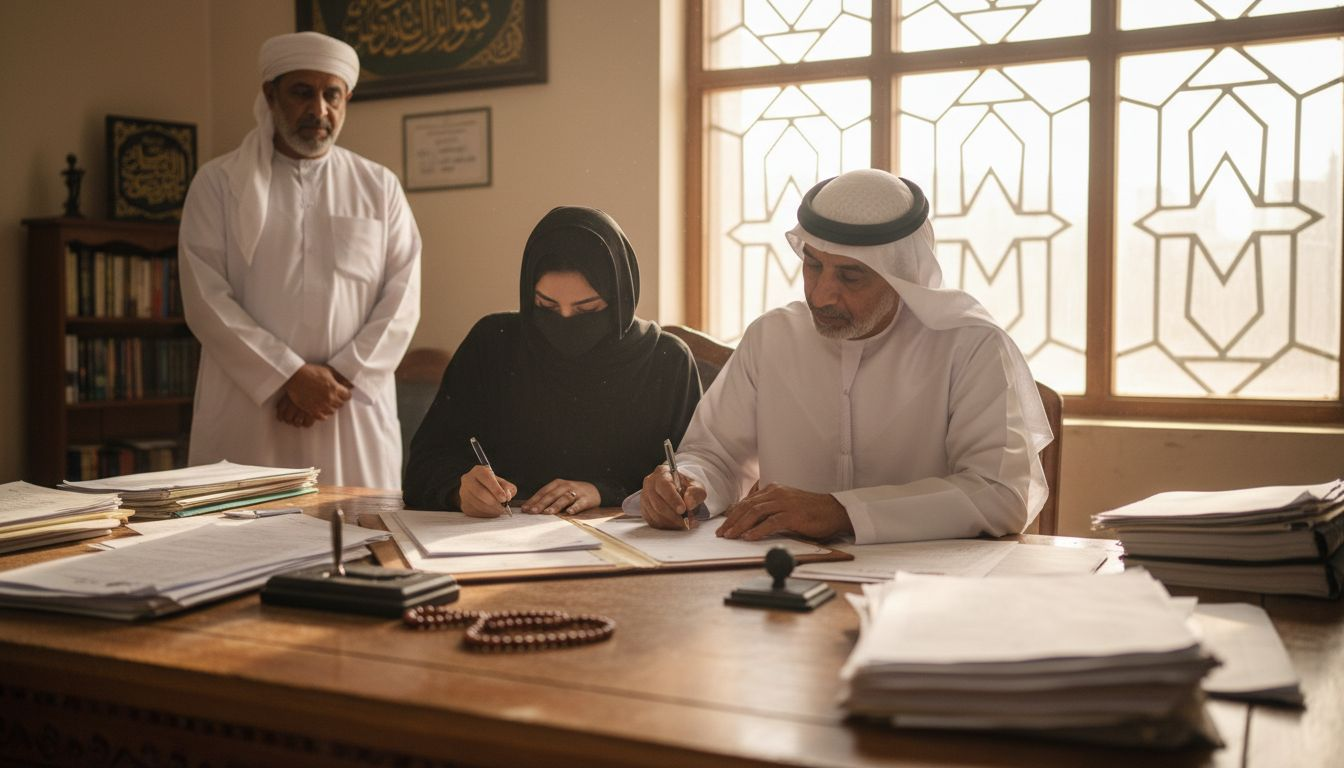
Unlike civil marriage, Islamic marriage involves specific religious requirements that must be fulfilled for the union to be valid under Sharia. The marriage contract must comply with Islamic jurisprudence, including the specification of mahr (a mandatory dower paid by the groom to the bride). The presence of a wali (guardian) for the bride and witnesses during the ceremony are also typically required.
Key elements of Islamic marriage in the UAE include:
Religious ceremony conducted by an authorized Islamic authority or court
Mahr (dower) agreed upon and documented in the marriage contract
Wali (guardian) consent for the bride, usually her father or male relative
Two Muslim witnesses present during the marriage contract signing
Marriage registration with Sharia courts for legal recognition
Compliance with Islamic principles regarding prohibited marriages (e.g., close relatives)
The Islamic marriage framework extends beyond the wedding ceremony itself. It governs marital rights and obligations according to Islamic teachings, including financial responsibilities, custody rules if the marriage ends, and inheritance distribution. Muslim couples in the UAE cannot opt out of Sharia-based family law for their marriage, even if they hold foreign nationality.
Pro Tip: If you’re a Muslim expat marrying in the UAE, ensure your marriage contract clearly specifies all conditions including mahr amount and any special agreements, as these become legally binding under Sharia law.
Islamic marriage also differs in its dissolution procedures. Divorce under Sharia law follows specific religious rules, including talaq (husband initiated divorce) and khula (wife initiated divorce with conditions). These processes involve Sharia courts and may require mediation or waiting periods. Understanding what Sharia marriage means in the UAE helps Muslim couples prepare for both the ceremony and long term legal implications.
Comparing civil and Islamic marriage in the UAE: key differences and implications
The practical differences between civil and Islamic marriage affect everything from your wedding day to potential divorce proceedings. Here’s a direct comparison of the two systems:
Aspect | Civil Marriage | Islamic Marriage |
Eligibility | Both partners non-Muslim, 21+ (18+ in Abu Dhabi) | Both partners Muslim, age varies by emirate |
Religious ceremony | Not required, purely secular contract | Mandatory Islamic ceremony with authorized official |
Guardian consent | Not required | Wali (guardian) consent typically required for bride |
Documentation | Nationality proof, age verification, single status | Same plus Islamic marriage contract with mahr |
Legal framework | Federal Decree-Law No. 41 of 2022 | Personal Status Law No. 28 of 2005 |
Divorce process | Can apply home country law | Must follow Sharia procedures |
The eligibility requirements create the first major distinction. Civil marriage specifically serves non-Muslims who want a marriage recognized by UAE law without religious ceremonies. Islamic marriage, by contrast, requires both partners to be Muslim and incorporates religious obligations into the legal contract.
Procedural differences are equally significant:
Civil marriage uses digital platforms and bilingual services in Abu Dhabi and Dubai
Islamic marriage requires in person religious ceremonies and Sharia court registration
Civil marriage eliminates traditional prerequisites like medical screening or guardian approval
Islamic marriage maintains these requirements as part of religious compliance
Processing time for civil marriage is typically faster, often completed in days
Divorce procedures show the most dramatic contrast. Civil Family Law allows choice of home country law for divorce, giving non-Muslim couples flexibility in how their marriage dissolves. Islamic divorce follows Sharia principles with specific waiting periods, custody preferences, and financial settlements based on religious doctrine.
Financial outcomes in divorce can differ substantially. In 2025, Abu Dhabi Civil Family Court finalized a no-fault divorce with a record large financial settlement, demonstrating how civil law increasingly recognizes contributions from both spouses. Islamic divorce settlements follow Sharia rules on mahr return, maintenance periods, and asset division based on pre-marriage agreements.
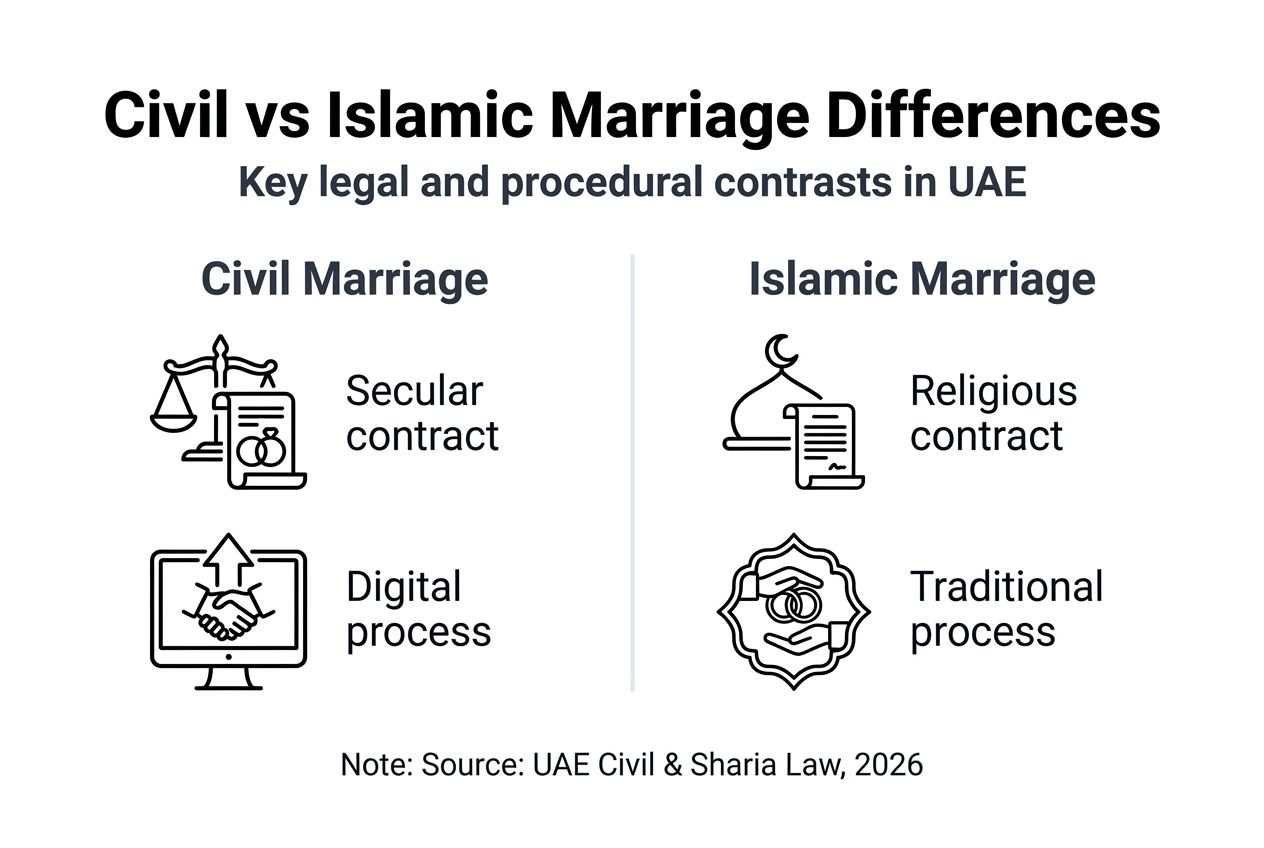
For a detailed comparison focused on your situation, visit our guide on civil vs Islamic marriage in the UAE to understand which option aligns with your religious identity and legal needs.
Practical advice for couples choosing between civil and Islamic marriage in the UAE
Your first step is verifying your eligibility based on religion and age. Non-Muslim expatriates must ensure their cases fall exclusively under the 2022 Civil Personal Status Law to avoid flawed legal strategies. Muslims should confirm they meet Sharia court requirements in their chosen emirate.
Document preparation varies significantly between the two systems:
Non-Muslims need nationality documents, proof of single status, and birth certificates for civil marriage
Muslims require the same documents plus religious certificates and guardian consent documentation
All documents must be officially translated to Arabic and attested by relevant authorities
Embassy certifications may be required depending on your nationality
Plan for attestation timelines, which can take several weeks if documents originate overseas
Understanding consent requirements prevents delays. Civil marriage requires only the consent of both adult partners before a judge. Islamic marriage adds the requirement of wali consent for the bride and may involve family negotiations around mahr and marriage conditions. Know which system applies to you before beginning document collection.
Pro Tip: Start your document attestation process at least six weeks before your planned wedding date, especially if you need to obtain documents from your home country and have them certified through multiple authorities.
Consider the long term legal implications beyond your wedding day. If you might divorce in the future, understand how each system handles asset division, custody, and maintenance. Civil marriage gives you more flexibility to apply familiar home country laws. Islamic marriage binds you to Sharia principles regardless of your nationality.
For civil marriage, Abu Dhabi’s Civil Family Court offers the most advanced services in the UAE with digital submission and bilingual support. Dubai courts also process civil marriages but may have different procedural requirements. Check whether civil marriage is required for UAE expats in your specific situation, especially if you’re already married abroad and need UAE recognition.
If you’re planning a civil union in Abu Dhabi, our Abu Dhabi civil marriage guide walks through the entire court process step by step, including online application procedures introduced in 2026.
Finally, seek expert legal advice if your situation involves complexity. Mixed religion couples, previous marriages, or children from prior relationships all create additional considerations. Professional guidance ensures you choose the right marriage path and complete all requirements correctly the first time.
Plan your civil or Islamic wedding with Harris & Charms
Navigating UAE marriage law doesn’t have to be overwhelming when you have expert support. Harris & Charms specializes in both civil marriage packages in Dubai and Islamic wedding services tailored for expat couples.

Our experienced team handles all documentation, court procedures, and legal attestation requirements so you can focus on celebrating your union. Whether you need a streamlined civil ceremony or a traditional Islamic wedding with full Sharia compliance, we provide comprehensive marriage services across the UAE. From initial consultation through final registration, we guide you through every step with personalized attention that reflects our own love story and commitment to exceptional service. Contact Harris & Charms today to start planning your UAE wedding with confidence and ease.
FAQ
What is the key difference between civil and Islamic marriage in the UAE?
Civil marriage is a secular legal contract designed for non-Muslims, eliminating religious ceremonies and traditional prerequisites. Islamic marriage follows Sharia law for Muslims, incorporating religious requirements like guardian consent, mahr, and Islamic ceremonies into the legal framework.
Who is eligible for civil marriage in the UAE?
Both partners must be non-Muslim and at least 21 years old, though Abu Dhabi allows 18 year olds to marry civilly. You’ll need official nationality documents proving your age and religion. For complete eligibility details and documentation requirements, see our civil marriage eligibility guide.
Can Muslims apply for civil marriage in the UAE?
No, civil marriage is restricted to non-Muslims under Federal Decree-Law No. 41 of 2022. Muslims must marry under Sharia-based Islamic marriage laws governed by Personal Status Law No. 28 of 2005. Your religion at the time of marriage determines which legal system applies.
How do divorce processes differ between civil and Islamic marriages?
Civil Family Law allows non-Muslims to choose their home country law for divorce, offering more flexibility in procedures and outcomes. Islamic divorce follows Sharia principles with specific religious rules governing talaq, khula, custody preferences, and financial settlements. The legal framework you marry under determines your divorce options.
Recommended
Comments