
Requirements for Civil Marriage UAE: Ensuring Legal Clarity


Over 25 percent of all marriages in the United Arab Emirates now involve at least one foreign national, including many American couples seeking a legal and secular union. With changing laws and greater inclusivity, the UAE has become a practical destination for those wanting a transparent civil marriage process. Whether you are an expatriate or planning an international wedding, understanding the full meaning and scope of civil marriage in the UAE opens new opportunities to formalize your relationship with legal certainty.
Table of Contents
Key Takeaways
Point | Details |
Civil Marriage Definition | Civil marriage in the UAE is a legal union independent of religious requirements, recognized by government authorities. |
Eligibility Criteria | Couples must be at least 18 years old and possess necessary identification documents, medical certificates, and mutual consent. |
Legal Procedures | The civil marriage process involves document submission, verification, and signing a marriage contract, requiring careful preparation. |
Recent Legal Changes | New laws have expanded civil marriage options for non-Muslim residents and tourists, streamlining processes and reducing bureaucratic barriers. |
Civil Marriage UAE: Meaning and Scope
Civil marriage in the United Arab Emirates represents a legal union that transcends traditional religious boundaries, offering couples a secular pathway to matrimony. Unlike religious marriages, civil marriages are formal contracts registered and recognized by government authorities without mandatory religious ceremonies. The Abu Dhabi Law No. 14 of 2021 defines civil marriage as a union conducted strictly in accordance with established legal regulations, independent of specific religious prescriptions.
The scope of civil marriage in the UAE is comprehensive and inclusive, designed to accommodate diverse populations and relationship dynamics. These marriages are facilitated through the Civil Family Court, which provides a structured legal framework for solemnizing unions as civil contracts. Couples choosing this option receive full legal recognition, with all accompanying rights and protections afforded by legal marriage in the UAE.
Key characteristics of civil marriage in the UAE include:
Conducted without religious prerequisites
Legally binding across all emirates
Available to both UAE nationals and expatriates
Processed through official government channels
Provides equal legal standing for both partners
Unlike traditional marriage models, civil marriages in the UAE offer a modern, flexible approach to matrimonial unions. The process emphasizes legal clarity, personal choice, and administrative transparency, ensuring that couples can formalize their relationship according to standardized civil protocols.
Who Is Eligible for Civil Marriage UAE
Civil marriage in the United Arab Emirates offers a comprehensive legal framework that defines specific eligibility criteria to ensure the integrity and legality of matrimonial unions. The Abu Dhabi Law No. 14 of 2021 establishes clear guidelines for individuals seeking to enter into a civil marriage, focusing on fundamental requirements that protect the rights and interests of both parties through detailed civil marriage protocols.
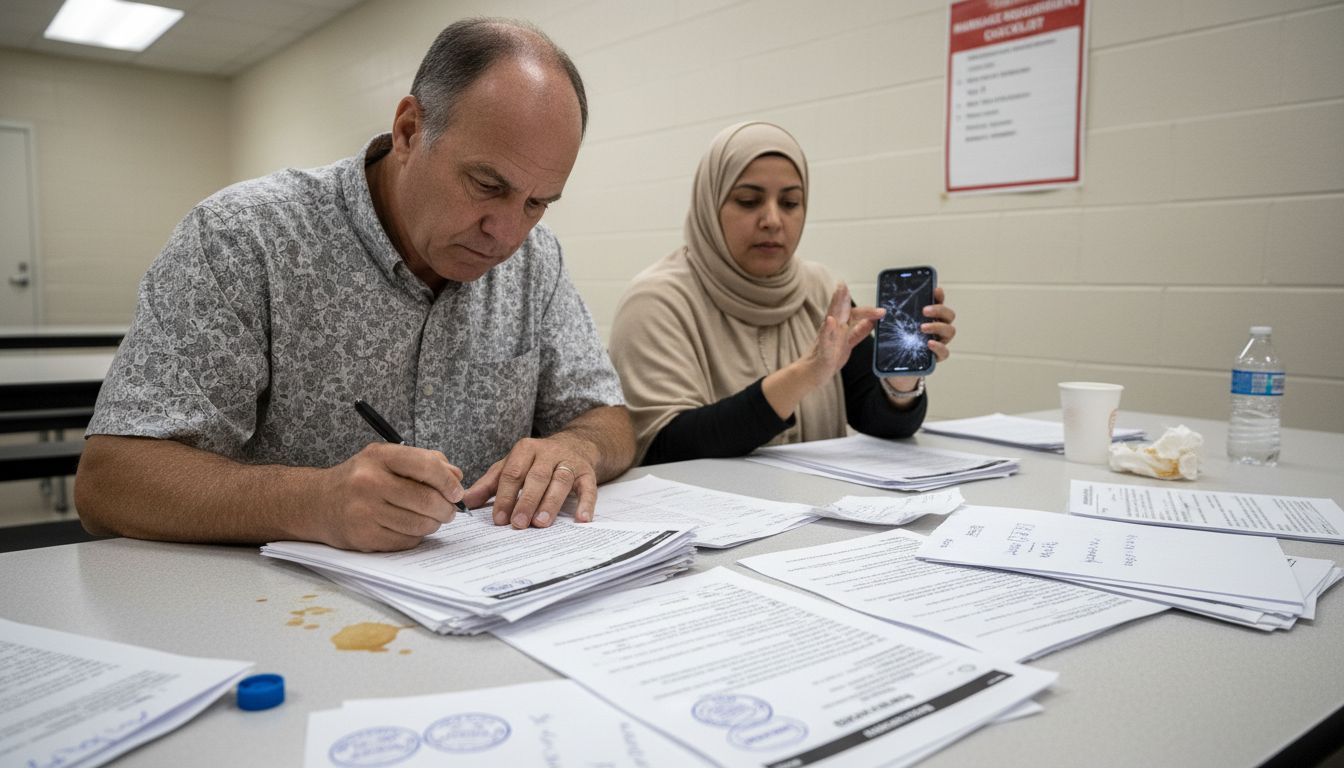
Age Requirements are paramount in determining eligibility for civil marriage. Both partners must be at least 18 years old, demonstrating legal maturity and capacity to provide informed consent. This age threshold applies universally, ensuring that individuals have reached a developmental stage where they can make autonomous decisions about marriage. Additionally, the law mandates that all participants must have the mental capacity to comprehend the legal and personal implications of marriage.
Eligibility extends to diverse demographic groups within the UAE, including:
Non-Muslim residents and expatriates
International tourists meeting legal requirements
Individuals from various national backgrounds
Couples seeking a secular marriage process
Partners who prefer civil documentation over religious ceremonies
Specific documentation and personal status requirements play a crucial role in determining marriage eligibility. Applicants must provide proof of:
Valid identification documents
No existing marital commitments
Medical fitness certificates
Proof of legal residency status (for expatriates)
Explicit mutual consent for marriage
The UAE’s civil marriage system prioritizes individual choice, legal transparency, and personal autonomy, creating an inclusive environment that respects diverse relationship dynamics while maintaining robust legal standards.
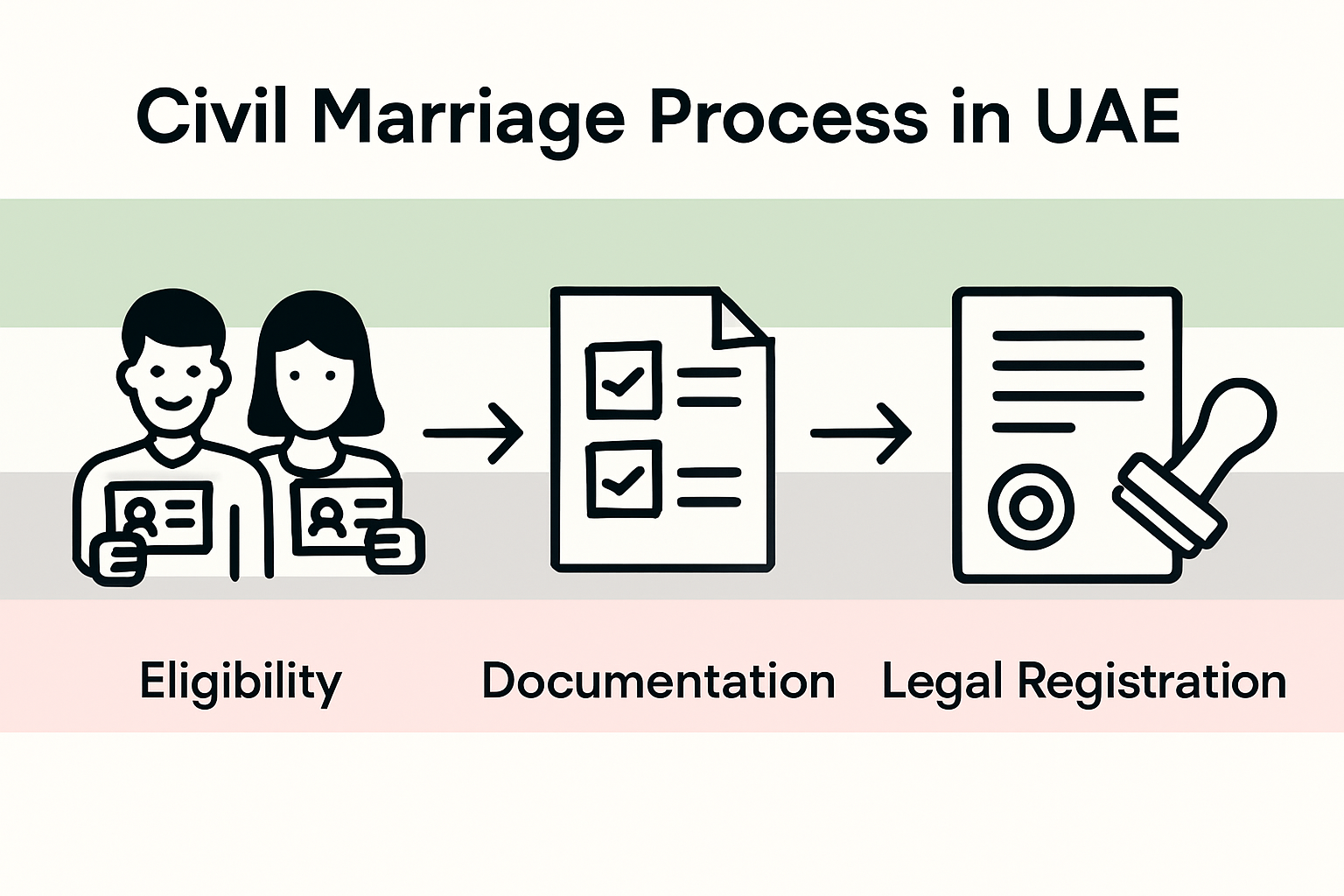
Key Documents and Legal Steps Required
Navigating the civil marriage process in the UAE requires meticulous preparation and understanding of the essential documents and legal procedures. Couples must strategically approach their marriage documentation to ensure a smooth and legally recognized union across the Emirates.
Mandatory Documentation forms the cornerstone of the civil marriage process. Applicants must compile a comprehensive set of legal papers that authenticate their identities, personal status, and eligibility for marriage. These critical documents typically include:
Original valid passports
Emirates ID or residence permit
Birth certificates (translated and authenticated)
Divorce or death certificates (if previously married)
No-objection certificates from respective embassies
Proof of legal residency status
The legal steps for civil marriage in the UAE follow a structured sequence designed to ensure comprehensive verification and legal compliance:
Initial application submission to Civil Family Court
Document verification and authentication
Payment of required marriage registration fees
Mandatory counseling session (if applicable)
Final marriage contract signing
Issuance of official marriage certificate
Special considerations exist for expatriate couples, who must provide additional documentation proving their legal status and eligibility. Foreign nationals need to ensure all documents are properly translated into Arabic and authenticated by relevant authorities. The process demands precision, with even minor documentation errors potentially causing significant delays in marriage registration.
Recent Law Changes and Special Cases
The United Arab Emirates has undergone significant legal transformations in civil marriage regulations, particularly with the introduction of Abu Dhabi Law No. 14 of 2021, which dramatically reshaped the matrimonial landscape for non-Muslim residents and tourists. These progressive legal modifications represent a substantial shift in marriage protocols that prioritize individual choice and legal flexibility.
Special Cases in civil marriage now encompass a broader range of scenarios, reflecting the UAE’s commitment to inclusivity and modern legal frameworks. The new regulations specifically address unique situations such as:
Marriages involving international couples
Unions between individuals with different nationalities
Marriages for non-resident tourists
Secular marriage options for expatriate communities
Simplified procedures for couples without religious affiliations
Key legislative changes introduce unprecedented flexibility in civil marriage procedures:
Removal of mandatory religious ceremony requirements
Streamlined documentation processes
Equal legal recognition for civil marriages
Expanded eligibility for non-Muslim residents
Simplified authentication of international documents
Reduced bureaucratic obstacles for foreign nationals
The evolving legal landscape demonstrates the UAE’s progressive approach to marriage regulations. Expatriates and international couples now benefit from more accessible, transparent, and straightforward civil marriage processes that respect individual autonomy while maintaining robust legal standards.
Common Obstacles and How to Avoid Them
Civil marriage in the UAE presents unique challenges that can potentially derail couples’ matrimonial plans if not carefully navigated. Understanding these potential roadblocks is crucial for a smooth marriage registration process, ensuring couples are prepared and proactive in addressing potential complications.
Documentation Challenges represent the most frequent hurdle for couples pursuing civil marriage. Common obstacles include:
Incomplete or improperly authenticated identification documents
Expired passports or residence permits
Insufficient translations of international documents
Missing embassy-specific certifications
Unresolved previous marital status complications
To mitigate these challenges, couples should:
Obtain certified document translations well in advance
Verify document authenticity with respective embassies
Ensure all identification papers are current
Collect comprehensive proof of legal status
Prepare additional supporting documentation
Consult legal professionals specializing in civil marriages
Financial and legal preparedness plays a critical role in navigating potential obstacles. Expatriate couples, in particular, must be diligent in understanding jurisdiction-specific requirements, maintaining meticulous records, and anticipating potential administrative complexities that could interrupt their marriage registration process.
Simplify Your Civil Marriage Journey in the UAE
Navigating the complex requirements and legal clarity needed for a civil marriage in the UAE can be overwhelming. From gathering the right documents to understanding eligibility criteria and avoiding common obstacles, couples often face stressful delays and confusion. The challenges include ensuring precise document translations, meeting age and residency rules, and complying with recent law changes. You deserve a clear, hassle-free path to making your union official.
Harris & Charms is here to transform your experience. Our personalized support covers everything from legal document processing to expert guidance on civil marriage requirements, helping you avoid costly mistakes. We bring a unique blend of legal assistance and heartfelt storytelling inspired by our founders’ own wedding journey.

Are you ready for stress-free civil marriage planning and legal certainty in the UAE? Visit Harris & Charms today. Discover how our dedicated team can assist you with documentation, marriage registration, and all related legal needs to ensure your special day unfolds with confidence and ease. Take the first step with our comprehensive civil marriage guide and explore the 7 key steps for marriage requirements to make your wedding plans a reality.
Your perfect civil marriage experience awaits—start now at Harris & Charms.
Frequently Asked Questions
What are the eligibility criteria for civil marriage in the UAE?
Both partners must be at least 18 years old, have mental capacity, and must not be currently married to other individuals. They also need to provide valid identification documents and proof of legal residency status if applicable.
What documents are required for a civil marriage in the UAE?
Key documents include original valid passports, Emirates ID or residence permit, birth certificates (translated and authenticated), divorce or death certificates if applicable, no-objection certificates from respective embassies, and proof of legal residency status.
What is the process for registering a civil marriage in the UAE?
The process involves submitting an initial application to the Civil Family Court, document verification, paying marriage registration fees, attending a mandatory counseling session if required, signing the final marriage contract, and obtaining the official marriage certificate.
How does recent legislation impact the civil marriage process in the UAE?
Recent law changes, such as Abu Dhabi Law No. 14 of 2021, have removed mandatory religious ceremony requirements, streamlined documentation processes, and expanded eligibility for non-Muslim residents, making the civil marriage process more accessible and inclusive.
Recommended
Comments