
Marriage attestation in UAE: complete 2026 guide

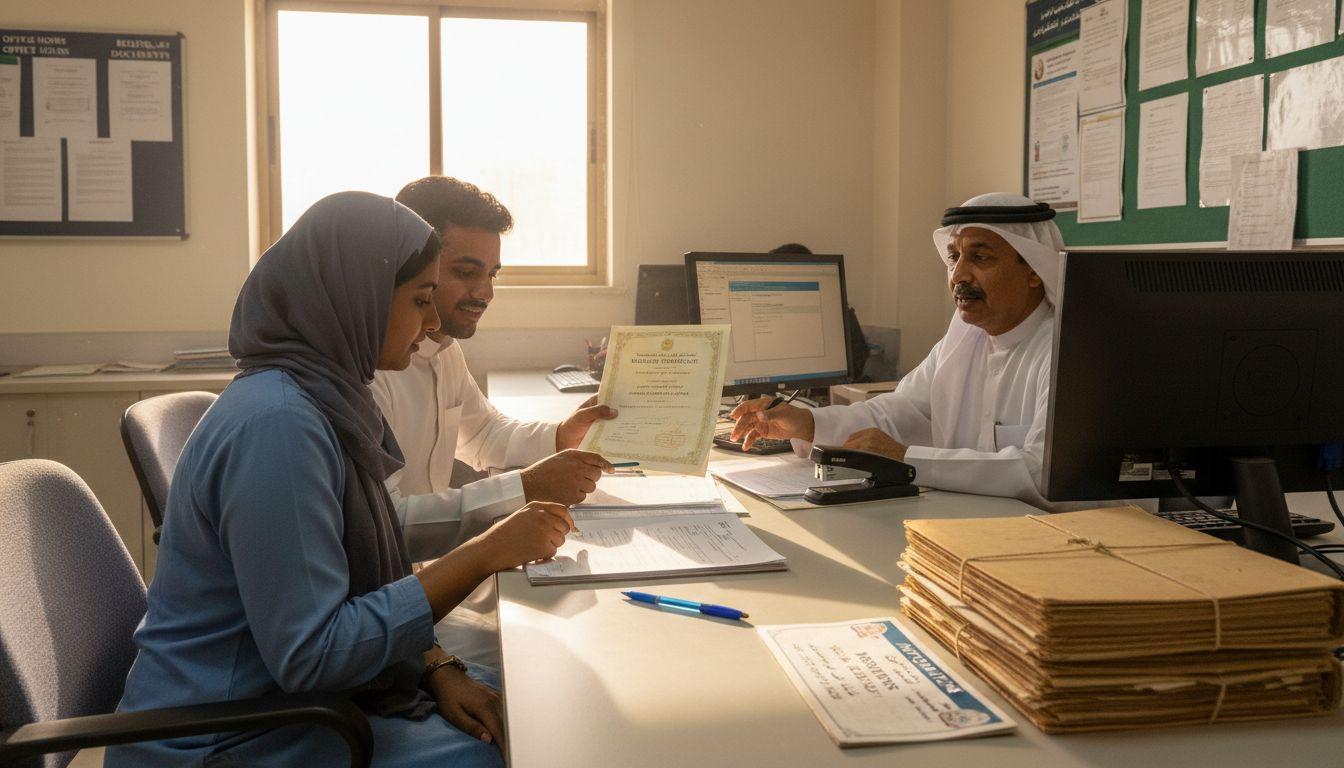
Many couples in the UAE believe their marriage certificate is automatically valid for all legal purposes, only to discover during visa sponsorship or property registration that they need attestation. Missing this step can delay family reunification by months and create unexpected legal complications. This guide walks you through exactly what marriage attestation means, when you need it, which authorities are involved, and how the process differs for civil and Islamic weddings performed inside or outside the UAE.
Table of Contents
Key takeaways
Point | Details |
Legal validation | Marriage attestation confirms your certificate’s authenticity for UAE authorities and international use |
Process varies by location | Marriages inside UAE follow simpler registration, while foreign certificates require multi-step embassy attestation |
Essential for sponsorship | Attested certificates are mandatory for family visa sponsorship, property transactions, and official documentation |
Timeline depends on origin | Processing takes days to weeks based on issuing country, document accuracy, and authority workload |
Understanding marriage attestation in the UAE
Marriage attestation in the UAE validates certificate authenticity for legal recognition by government authorities. Think of it as an official stamp of approval that transforms your marriage document from a simple certificate into a legally recognized instrument. Without attestation, your marriage certificate holds limited value for official transactions in the UAE, regardless of where you got married.
Couples need attested marriage certificates for numerous practical situations. Family visa sponsorship tops the list, as immigration authorities require verified marriage documents before processing dependent visas. Property purchases, bank account applications, and school enrollments for children all demand attested certificates. Insurance claims, inheritance matters, and even certain employment benefits require this validation.
Attestation proves a document is authentic and valid by verifying it before relevant authorities, establishing its legitimacy for legal proceedings.
Many couples confuse attestation with notarization, but these serve different purposes. Notarization simply confirms signatures and document execution, while attestation validates the document’s legal standing across jurisdictions. Attestation involves multiple government authorities verifying the certificate at different levels, creating a chain of authentication that satisfies UAE legal requirements.
Understanding marriage documentation UAE rules prevents costly delays. The attestation process varies significantly based on where your marriage occurred and which type of ceremony you chose. UAE authorities maintain strict standards to prevent document fraud and ensure only legitimate marriages receive legal recognition.
Key benefits of attesting your marriage documents include:
Legal recognition for all UAE government transactions and services
Smooth processing of family visa sponsorship without delays or rejections
Valid documentation for property ownership and financial transactions
Acceptance by international authorities if you relocate from the UAE
Protection of spousal rights in legal and inheritance matters
The validation process creates an official record that UAE authorities trust. This trust eliminates questioning and verification delays when you need to use your marriage certificate for time-sensitive matters. Investing effort in proper attestation upfront saves months of frustration later.
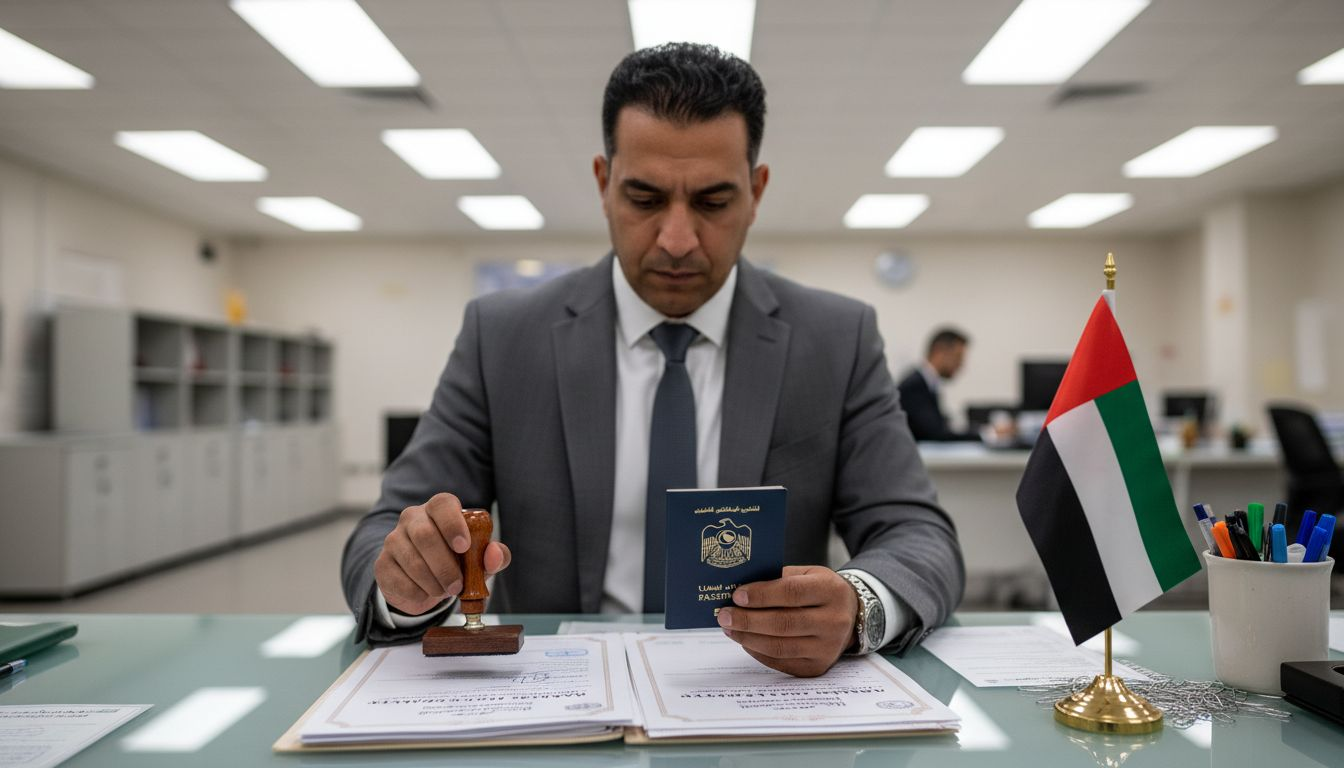
Marriage attestation process for civil and Islamic weddings in the UAE
Civil marriages performed within the UAE follow a streamlined path. Couples submit applications to Abu Dhabi Judicial Department or Dubai Court, then sign the certificate after approval. Once registered, these certificates require no additional domestic attestation for use within the UAE. The registration itself serves as official validation, making the document immediately usable for visa applications and other legal purposes.
Islamic marriages follow different requirements based on religious law. Marriage contracts between Muslim couples must register with Sharia courts to gain legal standing. The Sharia court issues an official marriage certificate after verifying both parties meet Islamic marriage requirements. This certificate then becomes the foundational document for any attestation needed for international use or specific UAE procedures.
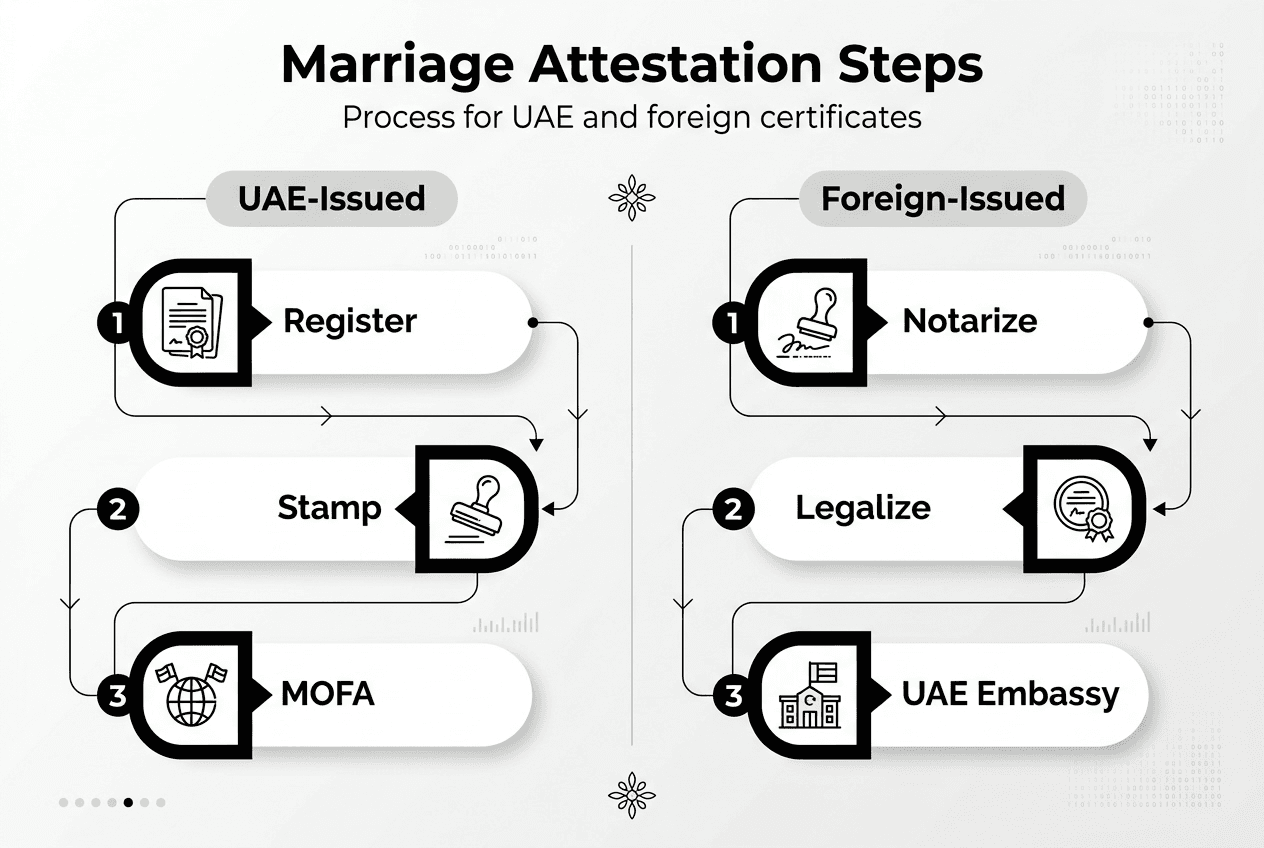
The attestation steps for marriages inside the UAE typically include:
Complete the marriage ceremony through approved judicial or Sharia court channels
Receive the official marriage certificate from the issuing authority
Verify all personal details, spellings, and dates match your identification documents exactly
Register the certificate with the relevant emirate’s authorities if required for your specific situation
Obtain attestation from UAE Ministry of Foreign Affairs only if using the certificate abroad
Different emirates handle registration through distinct authorities. Abu Dhabi processes civil marriages through the Abu Dhabi Judicial Department, while Dubai uses Dubai Courts. Sharjah, Ajman, and other emirates maintain their own court systems. Islamic marriages always route through Sharia courts regardless of emirate, though each emirate’s Sharia court operates independently.
Pro Tip: Before submitting any documents, triple-check that names, dates, and identification numbers match exactly across all paperwork. Even minor spelling variations between your passport and marriage certificate can trigger rejections that add weeks to processing times.
Following the correct marriage registration step by step process eliminates confusion. Civil and Islamic marriages receive equal legal standing once properly registered, but the paths to registration differ substantially. Understanding which authority handles your marriage type prevents wasted trips and ensures you gather the right supporting documents from the start.
Marriage Type | Primary Authority | Attestation for UAE Use | Attestation for International Use |
Civil (Abu Dhabi) | Abu Dhabi Judicial Department | Not required after registration | UAE Ministry of Foreign Affairs |
Civil (Dubai) | Dubai Courts | Not required after registration | UAE Ministry of Foreign Affairs |
Islamic | Emirate Sharia Courts | Not required after registration | UAE Ministry of Foreign Affairs |
Foreign Certificate | Varies by country | Full attestation chain required | Already completed abroad |
The table shows that marriages performed in the UAE enjoy simplified processes compared to foreign certificates. Once you complete registration with the appropriate UAE authority, your certificate holds full legal weight domestically. Only when using the certificate outside the UAE do you need additional Ministry of Foreign Affairs attestation.
Attesting marriage certificates issued outside the UAE: procedures and tips
Foreign-issued marriage certificates face more complex requirements. Certificates must receive notarization and attestation from the origin country’s Ministry of Foreign Affairs, then the UAE embassy in that country, and finally the UAE Ministry of Foreign Affairs upon arrival. This three-stage process creates an unbroken chain of verification that UAE authorities trust.
The attestation sequence cannot be altered or skipped. Changing or skipping attestation steps leads to certificate rejection, forcing you to restart the entire process from the beginning. Each authority verifies the previous attestation before adding their own seal, so the order matters critically. Starting with UAE embassy attestation before home country validation guarantees rejection.
Common errors cause most delays in foreign certificate attestation. Name mismatches between passports and certificates top the list, even if the difference involves just one letter or a missing middle name. Translation errors create problems when certificates appear in languages other than Arabic or English. Missing apostille stamps for countries that signed the Hague Convention result in rejections. Expired identification documents used during the original marriage ceremony raise red flags that require additional explanation letters.
Required documents for attesting foreign marriage certificates include:
Original marriage certificate issued by the foreign country’s authorized body
Passport copies of both spouses showing clear personal details and validity dates
National ID or Emirates ID copies if either spouse holds UAE residency
Notarized translations if the certificate appears in any language besides Arabic or English
Apostille stamp if your marriage occurred in a Hague Convention member country
Previous attestation stamps from home country Ministry of Foreign Affairs
Pro Tip: Contact the UAE embassy in your marriage’s country of origin before starting the process. Embassy requirements sometimes include additional documents or specific formatting that official guidelines do not mention. A quick phone call saves weeks of back-and-forth corrections.
The marriage attestation UAE process for foreign certificates demands patience and attention to detail. Each country maintains slightly different attestation procedures, and some nations process documents faster than others. Western European certificates typically move through attestation within two to three weeks, while certificates from certain Asian and African countries may require four to six weeks due to additional verification steps.
Region | Typical Steps | Average Timeline | Common Challenges |
North America | Notarization, state attestation, federal attestation, UAE embassy, UAE MOFA | 3-4 weeks | State-level variations in procedures |
Europe (Hague) | Apostille, UAE embassy, UAE MOFA | 2-3 weeks | Translation requirements for non-English certificates |
Asia | Notarization, Ministry of Foreign Affairs, UAE embassy, UAE MOFA | 4-6 weeks | Multiple government departments involved |
Middle East | Ministry attestation, UAE embassy, UAE MOFA | 2-4 weeks | Political factors affecting embassy operations |
Geographic variations in processing reflect different government structures and bilateral agreements between countries. Hague Convention members enjoy streamlined processes through apostille stamps that replace multiple attestation levels. Non-member countries require each government layer to verify separately, extending timelines but ensuring thorough validation.
Understanding these regional differences helps set realistic expectations. Couples should begin the attestation process immediately after deciding to move to the UAE, rather than waiting until visa applications become urgent. Early preparation prevents the stress of rushed processing and expensive courier fees for expedited services.
Timelines, costs, and practical advice for marriage attestation in the UAE
Processing duration varies based on certificate origin, document accuracy, government workload, and chosen service type. Domestic UAE certificates typically process within one week when all details are correct. Foreign certificates range from two weeks for straightforward cases to eight weeks when complications arise. Peak periods like summer holidays and year-end slow processing as government offices operate with reduced staff.
Document errors cause the majority of delays. Mismatched names between marriage certificates and current passports require affidavits explaining name changes. Faded or unclear certificate copies force applicants to obtain fresh certified copies from issuing authorities. Missing signatures or seals from previous attestation stages send documents back to earlier steps in the chain. Each correction adds one to three weeks to total processing time.
Government workload fluctuates throughout the year. January and September see spikes as families aim to complete visa processes before school terms. December experiences slowdowns as offices close for holidays. Planning around these patterns helps avoid the longest wait times. Submitting applications during quieter months like March or October often yields faster results.
Attestation costs depend on issuing country, government and embassy fees, and service levels, with no standardized pricing. UAE domestic attestation for international use typically costs 200 to 400 dirhams through Ministry of Foreign Affairs. Foreign certificate attestation ranges from 800 to 2,500 dirhams depending on the country and whether you use standard or express processing. Embassy fees vary by nationality, with some charging fixed rates and others using sliding scales.
Additional expenses add up quickly. Translation services for non-English certificates cost 150 to 300 dirhams per page. Courier fees for sending documents between countries range from 100 to 500 dirhams depending on speed and insurance requirements. Notarization in the origin country might cost 50 to 200 dollars. These ancillary costs sometimes exceed the attestation fees themselves.
Practical preparation checklist for smooth attestation:
Verify your marriage certificate shows names exactly matching current passports before starting
Order extra certified copies of your marriage certificate from the issuing authority as backup
Research specific requirements for your nationality at the UAE embassy website
Budget for total costs including translations, courier fees, and express processing if needed
Allow minimum eight weeks from start to finish for foreign certificates to avoid rushing
Keep digital scans of all documents at each attestation stage to track progress
Confirm your certificate includes all required signatures and seals from the issuing authority
Pro Tip: Priority services cut processing times by 40 to 60 percent but cost double or triple standard fees. Use express processing only when absolutely necessary, such as urgent visa deadlines. For planned moves, standard processing saves money without sacrificing quality.
Understanding marriage certificate attestation delays helps you plan realistically. Most couples underestimate total timeline by focusing only on official processing periods while ignoring mail transit, document correction time, and appointment scheduling delays. Building buffer time into your planning prevents last-minute panic and expensive rush fees.
Cost optimization strategies make attestation more affordable. Combining multiple document attestations in one submission reduces per-document fees at embassies. Using registered mail instead of premium couriers for non-urgent stages saves 200 to 300 dirhams. Handling translations through community resources rather than premium services cuts costs while maintaining accuracy. These small savings accumulate to meaningful amounts, especially for couples attesting multiple documents simultaneously.
Simplify your marriage attestation and wedding planning with Harris N Charms
Navigating marriage attestation and wedding arrangements in the UAE becomes effortless with expert guidance. Harris N Charms specializes in comprehensive marriage services UAE that cover everything from civil and Islamic wedding ceremonies to complete documentation support. Our team understands the intricacies of attestation processes and handles the complex paperwork while you focus on celebrating your union.
We partner with trusted attestation specialists to ensure your marriage certificates receive proper validation without delays or rejections. Whether you married in the UAE or abroad, our experienced consultants guide you through each step, verify document accuracy before submission, and coordinate with relevant authorities on your behalf. This personalized approach transforms a potentially frustrating bureaucratic process into a smooth, worry-free experience. Contact Harris N Charms today to discuss your specific needs and discover how we make your marriage journey in the UAE both legally sound and memorably beautiful.
Frequently asked questions
What documents are required for marriage attestation in the UAE?
You need the original marriage certificate, passport copies of both spouses, and Emirates ID copies if applicable. Marriages performed abroad require notarized translations for non-English certificates, apostille stamps from Hague Convention countries, and previous attestation from your home country’s Ministry of Foreign Affairs. The 7-step checklist for UAE marriage documents provides detailed requirements based on your specific situation. Missing any required document triggers immediate rejection and restarts the timeline.
How long does the marriage attestation process typically take?
Processing ranges from one week for UAE-issued certificates to eight weeks for complex foreign attestations. Timeline depends on certificate origin, document accuracy, and government workload at each verification stage. Marriage certificate attestation delays commonly result from name mismatches or missing seals that require corrections. Starting the process two months before you need the attested certificate provides comfortable buffer time. Express services reduce timelines by 40 to 60 percent but cost significantly more.
Can a marriage certificate issued outside the UAE be used without attestation?
No, foreign-issued certificates require full attestation for legal acceptance in the UAE. Without proper validation, authorities reject certificates for visa sponsorship, property transactions, and official documentation. The marriage attestation UAE process mandates notarization in the origin country, attestation by that country’s Ministry of Foreign Affairs, verification by the UAE embassy there, and final attestation by UAE Ministry of Foreign Affairs. Skipping any step renders the certificate invalid for UAE purposes.
Is attestation required for both civil and Islamic marriages in the UAE?
Civil marriages performed in the UAE require application to judicial departments but need no domestic attestation after registration for use within the country. Islamic marriages must register with Sharia courts and similarly require no additional UAE attestation for domestic purposes. Both types need UAE Ministry of Foreign Affairs attestation only when using certificates internationally or for certain cross-border legal matters. The marriage registration step by step guide clarifies which situations demand attestation versus simple registration.
Recommended
Comments