
Why Expats Choose UAE Marriage: Legal Ease and Lifestyle


Over 40 percent of expats in the United Arab Emirates are now choosing to marry under the country’s progressive legal system, including a growing number of American couples. With new laws breaking down barriers, planning a civil or Islamic wedding has never been more accessible or inclusive for international residents. This guide reveals how personalized support can help you confidently manage legal documents, avoid common pitfalls, and create a stress-free wedding experience in the UAE.
Table of Contents
Key Takeaways of why expats choose UAE marriage
Point | Details |
Flexible Marriage Options | Expatriates in the UAE can choose between civil marriage and Islamic marriage, allowing for diverse legal arrangements that respect personal backgrounds. |
Simplified Procedures | Recent legal changes have eliminated mandatory pre-marital medical tests and guardian consent for civil marriages, streamlining the process for couples. |
Comprehensive Legal Benefits | Legal marriage in the UAE provides expatriates with enhanced residency rights, property rights, and protections in international contexts. |
Documentation Essentials | Couples should prepare and authenticate required documents well in advance to avoid delays and ensure compliance with local regulations. |
UAE Marriage for Expats: Core Definition and Myths
The United Arab Emirates offers a unique and progressive legal framework for marriage that extends far beyond traditional expectations, particularly for expatriates seeking a legally recognized union. Under the Federal Decree Law No. 41 of 2022, non-Muslim residents now have unprecedented flexibility in choosing how they want to formalize their marriage, breaking down many previous bureaucratic barriers that once complicated international marriages.
At its core, UAE marriage for expats represents a secular, legally binding contract that provides multiple pathways for couples. The law allows non-Muslim residents to either apply their home country’s family laws or select alternative personal status regulations for marriage and divorce. This groundbreaking approach means expatriates are no longer confined to rigid, one-size-fits-all marriage protocols, but can instead craft a legal union that respects their personal, cultural, and legal backgrounds.
Several persistent myths about UAE marriages need debunking. Contrary to popular belief, civil marriages in the UAE are now straightforward processes that do not require complex pre-marital medical tests or mandatory guardian consent. The legal implications of marriage in the UAE have become significantly more transparent and accessible for international couples. Modern regulations prioritize individual choice, allowing couples to navigate marriage procedures with greater autonomy and understanding.
For expatriates considering marriage in the UAE, understanding the legal landscape is crucial. The new regulations represent a significant shift towards more inclusive, flexible marriage frameworks that recognize the diverse backgrounds of the UAE’s international population. Whether you’re a professional, student, or long-term resident, the UAE offers a welcoming environment for couples seeking to formalize their relationship.
Pro Tip: Before initiating marriage procedures, carefully review your specific nationality’s requirements and consult with legal professionals who specialize in UAE marriage regulations to ensure a smooth, compliant process.
Civil and Islamic Marriage: Key Differences
The United Arab Emirates offers two distinct marriage pathways for residents: civil marriage for non-Muslims and Islamic marriage for Muslim couples, each with unique legal frameworks and procedural requirements. These two approaches reflect the UAE’s commitment to providing flexible legal options that respect diverse cultural and religious backgrounds while ensuring comprehensive legal protections for all couples.
Civil marriage, governed by Federal Decree-Law No. 41 of 2022, represents a secular legal contract that provides non-Muslim residents unprecedented flexibility. This approach allows couples to choose between applying their home country’s family laws or selecting alternative personal status regulations. In contrast, Islamic marriage in the UAE follows traditional Sharia law principles, incorporating specific religious requirements and cultural practices that differ significantly from civil marriage procedures.

Key distinctions between civil and Islamic marriages extend beyond religious considerations. Civil marriages eliminate traditional prerequisites like mandatory guardian consent and pre-marital medical screenings, offering a streamlined process for international couples. Islamic marriages, however, maintain more complex procedural requirements, including mandatory guardian involvement, specific religious ceremony protocols, and adherence to Sharia legal interpretations regarding marriage rights, property, and potential divorce proceedings.
Understanding why expats choose uae marriage is crucial for expatriates navigating marriage options in the UAE. While civil marriages provide a more flexible, secular approach, Islamic marriages preserve important cultural and religious traditions. Both pathways offer legal recognition and protection, ensuring couples can choose a marriage framework that aligns with their personal beliefs, cultural background, and legal requirements.
Here is a side-by-side look at key differences between civil and Islamic marriages in the UAE:
Aspect | Civil Marriage for Non-Muslims | Islamic Marriage for Muslims |
Legal Framework | Federal Decree-Law No. 41/2022 | Sharia law and local courts |
Guardian Consent | Not required | Mandatory for bride |
Pre-Marital Medical | Not mandatory | Often required |
Law Choice | Home country or UAE law | Follows Sharia principles |
Ceremony Procedure | Secular court-based | Religious with official procedures |
Documentation | Arabic translation, attestation | Religious certificates, guardian documents |
Pro Tip: Consult with legal professionals specializing in UAE marriage regulations to comprehensively understand the specific requirements and implications of civil versus Islamic marriage approaches.
Legal Requirements and Documentation Steps
Navigating the marriage documentation process in the United Arab Emirates requires careful preparation and understanding of specific legal requirements for expatriates. Marriage eligibility in the UAE hinges on several critical factors, including age restrictions, nationality considerations, and comprehensive document verification procedures that ensure legal compliance and personal authenticity.
Expats seeking to get married must compile a comprehensive set of documents, which typically includes a detailed checklist of marriage documentation. Essential requirements include original passports, valid residency permits, proof of marital status, and attested divorce or death certificates for previously married individuals. Non-Muslim couples must be over 18 years old, and all documents must be officially translated into Arabic and authenticated by both home country and UAE governmental authorities.
The documentation process varies slightly between different emirates, with Dubai and Abu Dhabi maintaining unique administrative protocols. Couples must submit their application through relevant local courts, undergo mandatory document verification, and attend a formal signing ceremony. Each emirate may have nuanced requirements regarding document attestation, translation services, and specific paperwork needed to validate the marriage application. This complex process underscores the importance of meticulous preparation and potentially seeking professional guidance to navigate the legal landscape effectively.
Understanding the intricate legal framework is crucial for expatriates planning to marry in the UAE. The documentation steps are designed to ensure legal transparency, protect individual rights, and maintain the integrity of marriage registration processes. While the requirements might seem complex, they ultimately provide a structured and secure approach to international marriages within the UAE’s multicultural environment.
Pro Tip: Start collecting and authenticating your marriage documents at least three months before your planned wedding date to account for potential processing delays and unexpected bureaucratic requirements.
Unique Benefits for International Couples
The United Arab Emirates offers a groundbreaking legal framework that provides international couples with unprecedented advantages, transforming the traditional marriage landscape for expatriates. Marriage in the UAE represents more than a personal commitment; it’s a strategic life decision that can unlock significant legal, financial, and personal opportunities for couples from diverse global backgrounds.
International couples discover remarkable benefits through legal marriage in the UAE, particularly regarding residency rights and legal protections. The civil marriage system allows couples to establish clear legal status, facilitate immigration procedures, and secure comprehensive inheritance rights. These legal reforms mean that expatriate couples can now navigate complex international relationship dynamics with greater confidence and security, knowing their union is recognized across multiple jurisdictions.
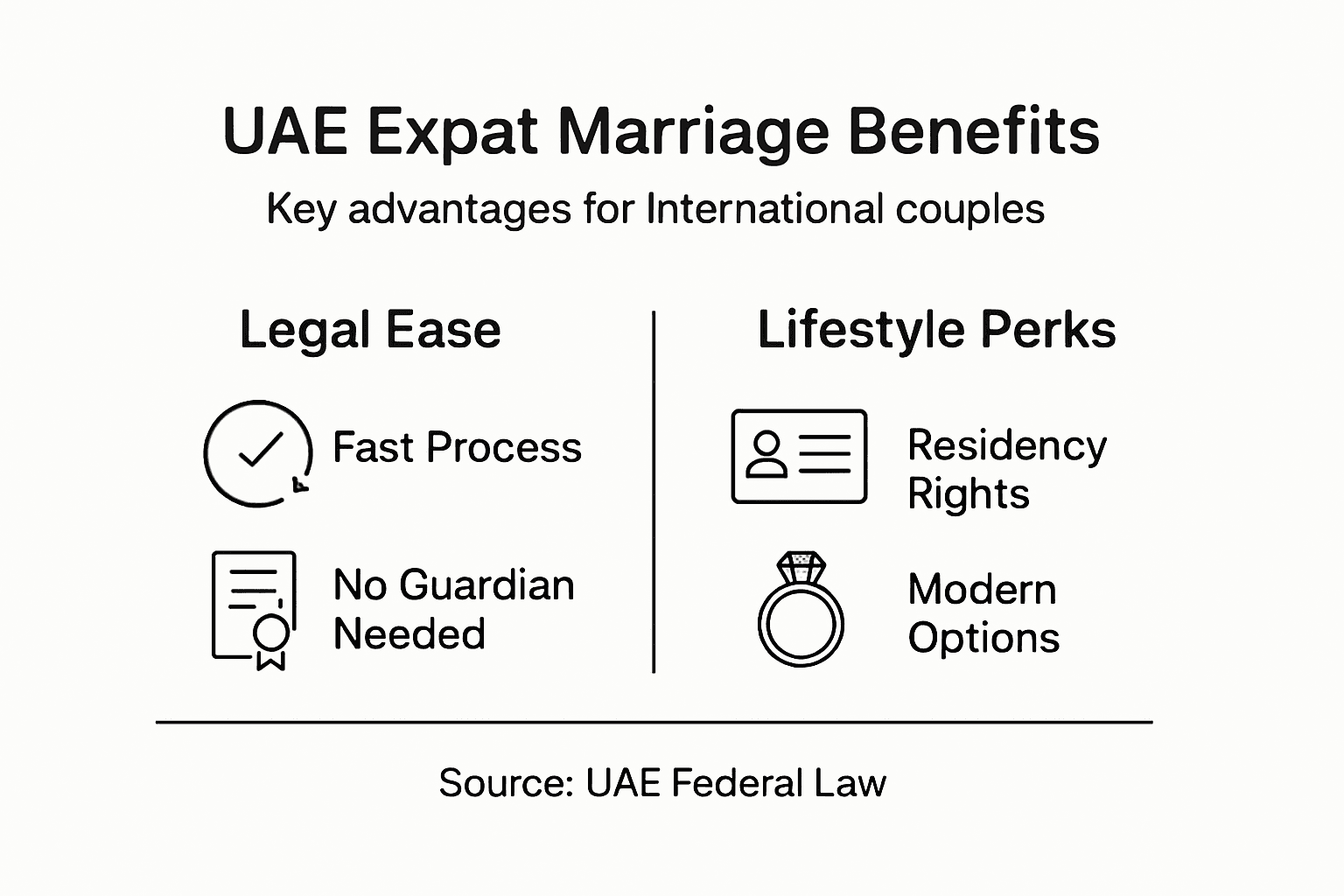
The UAE’s progressive marriage laws create unique advantages that extend beyond traditional legal frameworks. Couples gain enhanced property rights, simplified custody arrangements, and streamlined processes for potential future relocations. The legal system provides robust protections for both partners, ensuring equitable treatment regardless of nationality, and offering a level of legal clarity that is often challenging to achieve in other international marriage scenarios. This comprehensive approach makes the UAE an attractive destination for couples seeking a legally sophisticated and supportive environment for their relationship.
Beyond legal technicalities, the UAE’s marriage system reflects a broader commitment to supporting international relationships. The flexible approach accommodates diverse cultural backgrounds, religious preferences, and personal circumstances, making it an exceptionally welcoming environment for global couples. Whether seeking permanent residency, planning international careers, or simply desiring a stable legal foundation for their relationship, international couples find the UAE’s marriage framework uniquely advantageous.
Pro Tip: Consult with legal professionals specializing in international marriage to fully understand the comprehensive range of benefits and strategic advantages available through UAE marriage processes.
Costs, Pitfalls, and Alternatives to Consider
Navigating marriage in the United Arab Emirates requires a strategic approach that balances legal complexities, financial considerations, and potential alternative pathways. Marriage expenses in the UAE can vary significantly, encompassing document translation, attestation fees, court registration, and potential legal consultation costs that expatriate couples must carefully evaluate before initiating the process.
Expats should be aware of several critical financial and procedural considerations, including comprehensive marriage documentation requirements. Translation and attestation services typically range from 500 to 2,500 AED, with additional court registration fees and potential legal consultation expenses. Potential pitfalls include incomplete documentation, unexpected processing delays, and complex verification procedures that can extend timelines and increase overall expenditure.
Alternative marriage approaches exist for couples seeking different options within the UAE legal framework. Muslim expats can opt for traditional Islamic wedding procedures, while some couples might consider marriage abroad followed by UAE legalization. However, these alternatives often come with complex residency implications and may compromise the comprehensive legal protections offered by direct civil marriage registration. Each approach carries unique administrative challenges, potential additional costs, and varying degrees of legal recognition that require careful evaluation.
Ultimately, understanding the nuanced landscape of marriage options demands thorough research and potentially professional guidance. While costs and procedural complexities might seem daunting, the UAE’s progressive legal framework provides remarkable flexibility for international couples. Careful planning, comprehensive document preparation, and strategic decision-making can help couples navigate these challenges effectively and minimize potential financial and administrative obstacles.
Below is a summary of common marriage expenses and potential pitfalls for expats in the UAE:
Item | Typical Cost Range | Risk/Pitfall |
Translation & Attestation | 500–2,500 AED | Incomplete authentication |
Court Registration | 300–2,000 AED | Delayed processing |
Legal Consultation | 1,000–5,000 AED | Unclear legal guidance |
Total Potential Outlay | 2,000–9,500 AED | Budget overruns, hidden fees |
Pro Tip: Budget an additional 20% beyond initial cost estimates to account for unexpected documentation, translation, and administrative expenses during the marriage registration process.
Make Your UAE Marriage Journey Effortless and Memorable
Navigating the complex legalities and documentation of marriage in the UAE can feel overwhelming for expats. The article highlights key pain points like choosing between civil and Islamic marriage, understanding diverse legal requirements, and managing document attestation and translation. Many couples seek a smooth process that honors their backgrounds while ensuring full legal compliance. Harris & Charms specializes in exactly these challenges by providing personalized support throughout your entire marriage journey in the UAE. From legal document processing to event planning, their expert team handles the details so you can focus on your special day.
Avoid delays and confusion with tailored solutions that simplify every step. Whether you want help understanding your marriage eligibility, preparing your paperwork, or organizing a seamless wedding ceremony, Harris & Charms is your trusted partner. Their founders’ inspiring love story is a testament to the deep understanding and care behind their services. Explore how civil and Islamic marriages can be effortlessly managed with professional guidance that respects your unique situation.
Begin your stress-free UAE marriage experience today. Visit Harris & Charms to learn more about their comprehensive marriage and legal support services. Discover detailed insights on the legal implications of marriage in the UAE and ensure all your documents align perfectly with requirements by following their 7-step checklist for UAE marriage documents.
Ready to transform your marriage plans into reality without the hassle?
Start your journey with Harris & Charms now

Frequently Asked Questions
What are the benefits of civil marriage for expatriates in the UAE?
Civil marriage in the UAE provides expatriates with legal recognition, ensures residency rights, simplifies custody arrangements, and offers comprehensive inheritance protections. This framework allows couples to enjoy a secure legal status in a multicultural environment.
Do expatriates need guardian consent for civil marriage in the UAE?
No, civil marriage for non-Muslim expatriates in the UAE does not require mandatory guardian consent, making the process more straightforward and accessible compared to traditional marriage practices.
What documents are required for expatriates to get married in the UAE?
Expatriates typically need to provide original passports, valid residency permits, proof of marital status, and attested divorce or death certificates if applicable. All documents must be translated into Arabic and authenticated by both home country and UAE authorities.
How does the legal marriage process differ between civil and Islamic marriage in the UAE?
Civil marriage offers a secular legal contract without traditional prerequisites like guardian consent and pre-marital medical checks. In contrast, Islamic marriage follows Sharia law and requires mandatory guardian involvement and specific religious protocols.
Recommended
Comments