
Marriage Certificate Explained: Why It Matters in the UAE

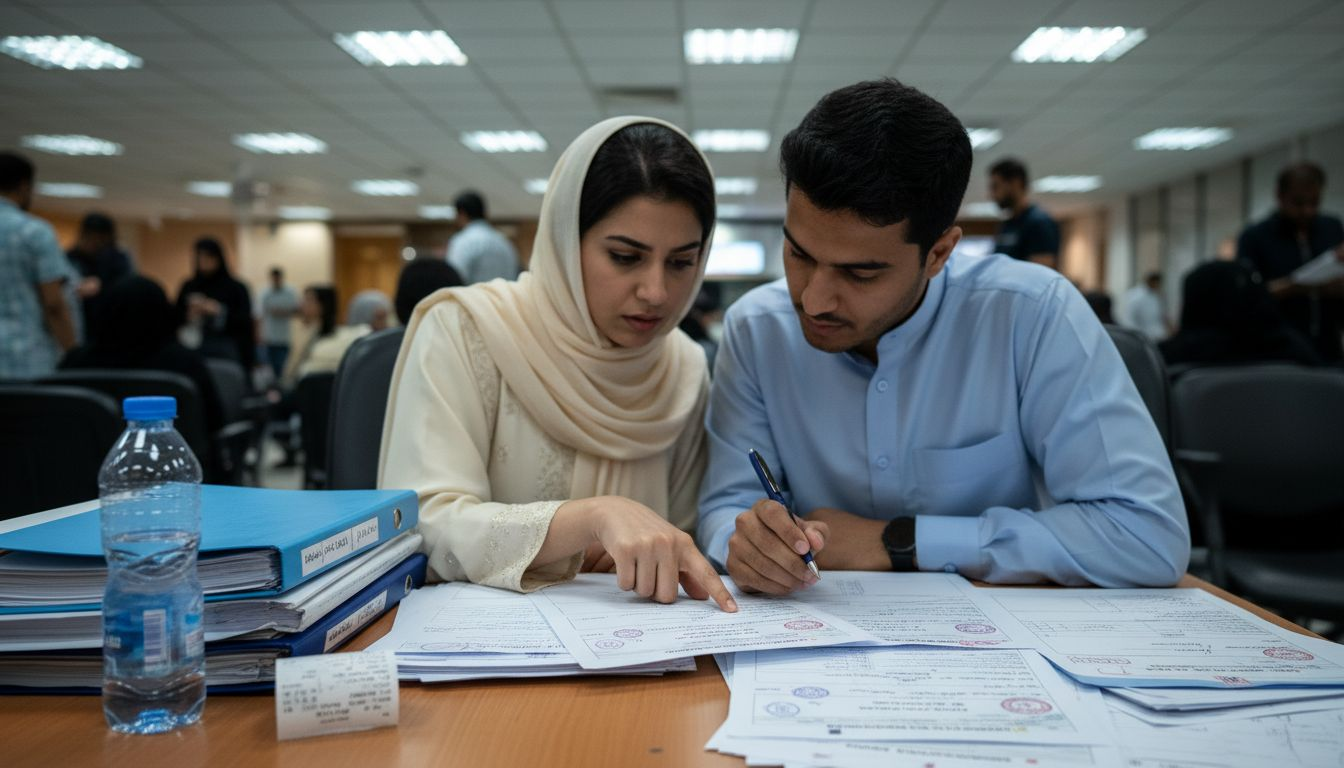
Marriage certificate explained: Booking your wedding in the United Arab Emirates means stepping into complex legal procedures that require clear documentation. For expats and foreign nationals, a marriage certificate is not just a formality—it is the gateway to rights such as residency, family sponsorship, and legal recognition of your union. This article delivers practical guidance on certificate types, eligibility, and the essential paperwork you need to safeguard your marital status for life in the UAE.
Table of Contents
Key Takeaways of Marriage Certificate Explained
Point | Details |
Marriage Certificate Importance | A marriage certificate in the UAE is a legal document that validates marital status and facilitates access to numerous rights and services. |
Types of Marriage Certificates | The UAE recognizes two primary marriage certificates: Sharia for Muslims and Civil for non-Muslims, each with specific requirements. |
Documentation Necessities | Couples must prepare thorough documentation, including passports, medical certificates, and embassy validations to ensure successful registration. |
Risks of Non-Compliance | Incomplete or incorrect documentation can lead to significant legal complications, including visa application rejections and residence permit issues. |
Defining the Marriage Certificate and Its Role
A marriage certificate in the United Arab Emirates represents far more than a simple piece of paper - it is a critical legal document that officially validates and establishes your marital status. This foundational document serves as a gateway to numerous legal rights and administrative processes essential for couples living in or moving to the UAE.
In the UAE, marriage certificates are categorized based on religious and legal frameworks, with two primary types of recognition:
Muslim Marriage Certificate: Processed through Sharia Courts for Muslim couples
Civil Marriage Certificate: Designed for non-Muslim expatriates and international couples
The legal significance of a UAE marriage certificate extends across multiple critical domains. It functions as an official validation of your marital relationship, enabling critical processes such as:
Obtaining residency permits
Sponsoring family members
Accessing healthcare and insurance benefits
Establishing inheritance and property rights
Facilitating visa and immigration procedures
For expatriates and international couples in the UAE, the marriage certificate represents more than a ceremonial document - it is a fundamental legal instrument that establishes personal and familial legal standing. The certificate’s authentication involves meticulous documentation, requiring verification of personal identification, nationality, and compliance with local legal standards.
A properly registered marriage certificate ensures your relationship receives full legal recognition within the UAE’s comprehensive administrative system.
Pro tip: Always retain multiple certified copies of your marriage certificate and ensure all translations are officially authenticated to prevent potential administrative complications.
Types of Marriage Certificates in the UAE
The United Arab Emirates recognizes multiple marriage certificate types, each tailored to specific legal and religious requirements for diverse populations residing within the country. Understanding these variations is crucial for navigating the complex landscape of marital documentation and legal recognition.
The two primary marriage certificate categories in the UAE are:
Here’s a comparison to help you understand how Sharia and Civil marriage certificates differ in the UAE:
Category | Sharia Court Marriage Certificate | Civil Marriage Certificate |
Target Population | Muslim nationals and expatriates | Non-Muslim expatriates |
Legal Framework | Islamic Sharia law | Secular civil procedures |
Relevant Authority | UAE Sharia Courts | Civil courts or local offices |
Typical Documentation | Religious and identification docs | International documents, embassy attestation |
Intended Use | Validates Islamic unions | Recognizes non-religious marriages |
Common Nationalities | Citizens of Muslim countries | Western, Asian, non-Muslim nations |
Sharia Court Marriage Certificate
Designed for Muslim nationals and Muslim expatriates
Processed through Islamic legal frameworks
Follows traditional Islamic marriage protocols
Civil Marriage Certificate
Intended for non-Muslim expatriates and international couples
Follows secular legal procedures
Provides legal recognition outside religious contexts
Within these primary categories, marriage registration processes become further nuanced based on several critical factors:
Nationality of the couple
Religious background
Residency status in the UAE
Specific emirate where registration occurs
For Muslim couples, the Sharia Court marriage process involves comprehensive documentation and adherence to Islamic legal principles. The court meticulously reviews personal status, verifies identification documents, and ensures compliance with religious marriage standards.
Non-Muslim expatriates navigate a different path through civil marriage registration, which requires extensive paperwork, including valid passports, entry permits, medical fitness certificates, and embassy-authenticated documents.
Marriage certificate types in the UAE are not just administrative formalities but reflect the country’s commitment to respecting diverse cultural and religious backgrounds.
Pro tip: Consult official UAE authorities or specialized legal consultants to understand the specific requirements for your unique marital registration scenario.
Legal Process and Required Documentation
The legal journey to obtaining a marriage certificate in the United Arab Emirates involves a complex series of administrative steps and stringent documentation requirements. Navigating this process successfully demands meticulous attention to detail and comprehensive understanding of the specific regulations governing marriage registration.
Both Muslim and non-Muslim couples must satisfy several fundamental eligibility criteria, which include:
Minimum age requirements (typically 18-21 years)
Mutual consent of both partners
Valid legal capacity to marry
No immediate familial relationship between partners
The documentation requirements for marriage registration are comprehensive and vary based on the couple’s specific circumstances. Essential documents typically include:
Valid international passports
Emirates ID or residency permits
Birth certificates
Proof of marital status (divorce or death certificates if previously married)
Pre-marital medical fitness certificates
No-objection certificates from respective embassies (for expatriates)
Non-Muslim expatriate couples face additional layers of complexity in their marriage registration process. The civil registration requires extensive documentation and verification, often involving multiple government departments and potentially requiring embassy authentication of personal documents.
Muslim couples pursuing Sharia Court marriage registration must adhere to Islamic legal principles, which involve a more religiously oriented documentation and verification process. This includes thorough review of personal status, religious background, and compliance with Islamic marriage protocols.
Successful marriage certificate registration in the UAE hinges on precise documentation, careful preparation, and strict adherence to legal requirements.
Pro tip: Prepare all required documents well in advance, ensure they are translated and authenticated by official entities, and consider consulting a legal professional specializing in UAE marriage registration.
Essential Benefits and Uses for Couples
A marriage certificate in the United Arab Emirates is far more than a ceremonial document - it serves as a critical legal instrument that unlocks numerous administrative and personal rights for couples navigating life in this dynamic country. The certificate becomes a foundational key to accessing essential services and establishing legal recognition.
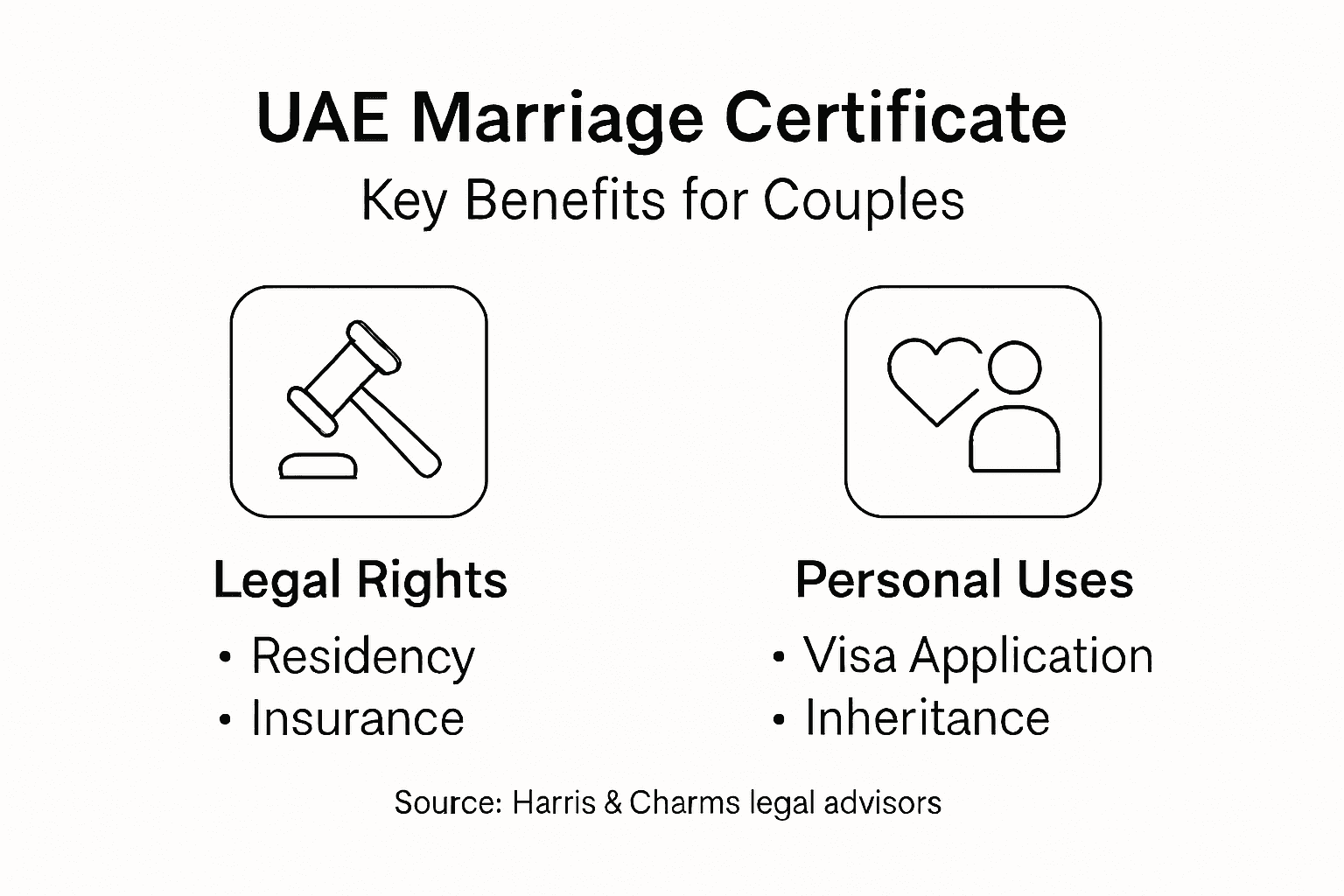
The primary benefits of a UAE marriage certificate encompass several critical domains:
Visa and Residency Processes
Enables spousal visa applications
Facilitates family reunification permits
Supports dependent visa registrations
Legal and Personal Rights
Establishes legal marital status
Provides inheritance and property rights
Enables legal representation and decision-making
Couples can leverage their marriage certificate for numerous administrative and personal advantages, including:
Healthcare insurance coverage
Joint banking and financial services
School enrollment for children
Property ownership and rental agreements
Government service access
Medical decision-making rights
For expatriate couples, the marriage certificate becomes particularly crucial in establishing their legal standing within the UAE’s complex administrative landscape. It serves as an official validation of their relationship, allowing them to navigate bureaucratic processes with greater ease and confidence.
The certificate’s significance extends beyond immediate administrative needs, providing long-term legal protection and recognition for couples from diverse cultural and national backgrounds. It represents a fundamental document that bridges personal relationships with official legal frameworks.
A properly authenticated marriage certificate is your passport to comprehensive legal and administrative rights in the UAE.
Pro tip: Create multiple certified copies of your marriage certificate and store them in secure, separate locations to ensure you always have backup documentation available.
Risks, Mistakes, and Legal Pitfalls to Avoid
Navigating marriage certificate registration in the United Arab Emirates involves complex legal terrain with significant potential consequences for couples who fail to meet precise documentation and procedural requirements. Administrative errors can result in substantial complications that extend far beyond initial paperwork challenges.
The most critical risks couples must proactively address include:
Documentation Failures
Incomplete or incorrect personal documentation
Unverified or improperly translated documents
Missing essential supporting certificates
Procedural Compliance Issues
Failing to follow specific emirate registration protocols
Overlooking religious or civil registration nuances
Missing critical submission deadlines
Common legal pitfalls in marriage certificate registration encompass several high-stakes scenarios:
Visa application rejections
Inability to establish legal marital status
Potential deportation or residency permit complications
Challenges in property and inheritance rights
Difficulties accessing healthcare and insurance benefits
Legal barriers to family sponsorship
Expatriate couples face additional complexity, with each nationality bringing unique documentation requirements and potential regulatory challenges. The UAE’s multicultural legal environment demands extraordinary precision in marriage certificate preparation and submission.
Bureaucratic processes in the UAE are unforgiving of administrative mistakes. A single overlooked detail can trigger extensive legal complications, potentially requiring costly and time-consuming corrections or resubmissions.
For reference, here’s a summary of common errors and their potential impact on UAE marriage registration:
Mistake Type | Typical Cause | Long-Term Consequence |
Missing document | Rushed paperwork | Registration rejection |
Poor translation | Uncertified translation | Administrative delays |
Wrong procedure | Unawareness of local rules | Visa issues or fines |
Missed deadlines | Failure to track dates | Extra approval requirements |
Incomplete authentication | Overlooked embassy/legalization step | Legal non-recognition |
One misplaced document or overlooked requirement can derail your entire marriage registration process.
Pro tip: Consider hiring a specialized legal consultant familiar with UAE marriage registration to meticulously review your documentation before submission, ensuring absolute compliance with all regulatory requirements.
Secure Your Marriage Certificate with Confidence in the UAE
Understanding the importance of your marriage certificate and the complex legal and documentation challenges it involves is the first step toward a smooth, stress-free process. Whether you are navigating the nuances of Sharia Court marriages or civil registrations, the pain points of document authentication, embassy approvals, and compliance with UAE laws can quickly become overwhelming.
At Harris & Charms, we specialize in guiding couples through every step of marriage registration and legal attestation. Our personalized approach combines expert knowledge with heartfelt care inspired by our own journey, ensuring you avoid common pitfalls like incomplete documentation or missed deadlines. From helping you prepare crucial paperwork to managing the official submissions and legal processes, we make sure your marriage certificate is valid, recognized, and ready to unlock all your marital rights.
Take the next step today by visiting our comprehensive services page at Harris & Charms where we offer tailored support for civil and Islamic marriage documentation. Discover how we handle everything from event planning to legal attestations with reliability you can trust.
Enhance your UAE marriage experience with expert assistance designed for peace of mind and lasting legal security.
Ready to simplify your marriage certificate process and secure your future together?

Visit Harris & Charms now to start your hassle-free journey with professional guidance and compassionate support. Ensure every detail is perfectly aligned so your marriage certificate opens doors without troubles.
Frequently Asked Questions
What is a marriage certificate and why is it important?
A marriage certificate is a legal document that verifies and establishes your marital status. In the UAE, it is crucial for obtaining residency permits, sponsoring family members, and accessing legal rights across various domains.
What types of marriage certificates are recognized in the UAE?
The UAE recognizes two primary types: the Muslim Marriage Certificate, processed through Sharia Courts for Muslim couples, and the Civil Marriage Certificate, designed for non-Muslim expatriates and international couples.
What documentation is required to obtain a marriage certificate in the UAE?
Essential documents typically include valid international passports, Emirates ID or residency permits, birth certificates, proof of marital status, medical fitness certificates, and potential no-objection certificates from embassies for expatriates.
What are the risks associated with not properly registering a marriage in the UAE?
Common risks include visa application rejections, inability to establish legal marital status, complications with property and inheritance rights, and difficulties accessing healthcare benefits due to incomplete or incorrect documentation.
Recommended
Comments