
Role of Embassy in UAE Marriages – What Expats Need

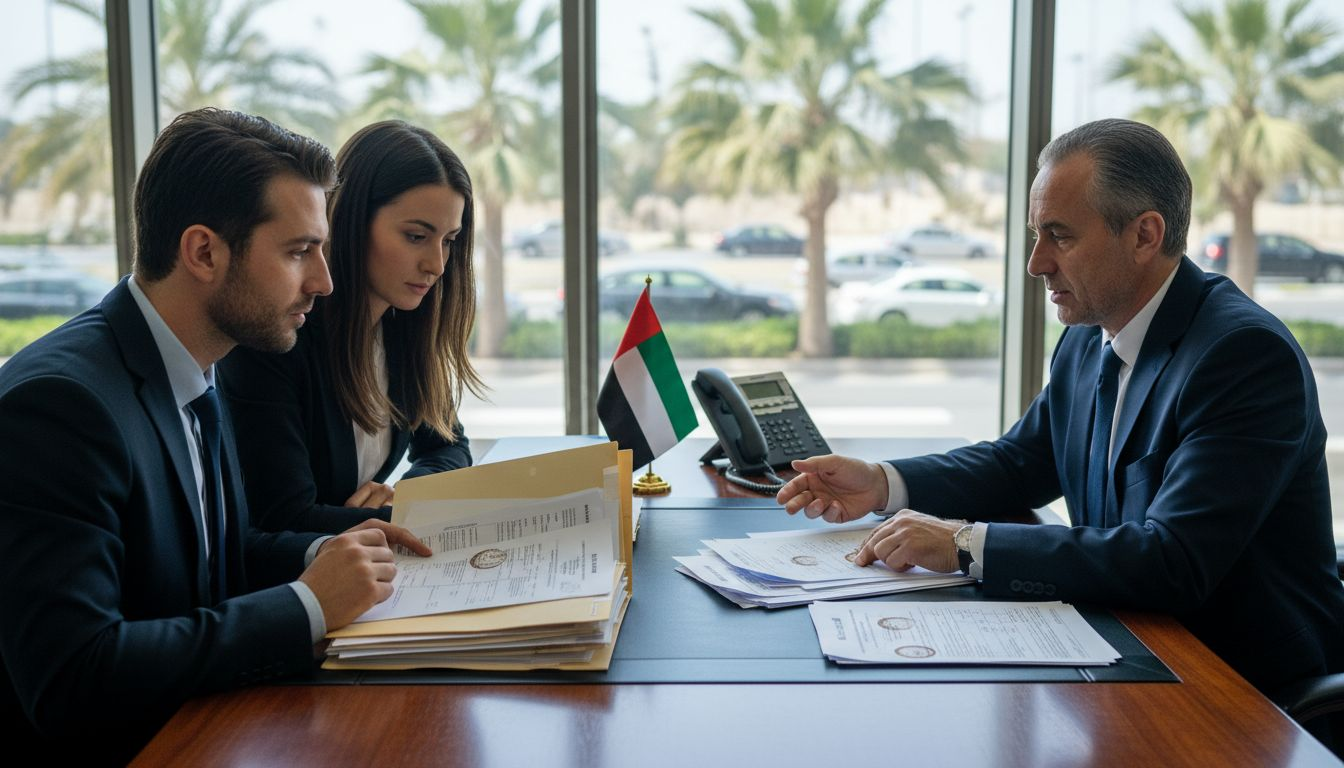
Planning a wedding in the United Arab Emirates brings unique legal steps that often leave expatriate couples feeling lost in paperwork. With every marriage type requiring specific documents and official stamps, understanding the exact role of your embassy is crucial for a smooth process. Embassy certification not only authenticates your marriage documents but also bridges cultural and legal gaps, assuring your union is fully recognized under both UAE law and your home country’s regulations.
Table of Contents
Key Takeaways
Point | Details |
Embassy’s Role in Marriages | Embassies authenticate and verify marriage documents for expatriates, ensuring compliance with UAE laws for legal recognition. |
Essential Document Preparation | Key documents for attestation include birth certificates, passports, and no-objection certificates; organize these well in advance. |
Legalization Process Overview | The legalization journey involves multiple steps, including document authentication, translation, and final validation by UAE authorities. |
Common Mistakes to Avoid | Couples should avoid submitting incomplete documents and ensure all translations are done by certified professionals to prevent delays. |
Defining Embassy’s Role in UAE Marriages
Embassies serve as critical intermediaries for expatriates navigating the complex landscape of international marriages in the United Arab Emirates. Their primary function centers on verifying and authenticating foreign marriage documents to ensure legal recognition within the UAE’s unique legal framework.
In the UAE’s multicultural environment, embassy certification plays a pivotal role in validating international marriages. Embassies perform several key functions for expatriate couples:
Authenticate original marriage certificates from the home country
Provide official translations of marriage documents into Arabic
Verify the legal standing of marriage documents
Assist in ensuring compliance with UAE marriage regulations
Support couples in obtaining necessary marriage recognition stamps
The legal process involves multiple steps of document verification. Marriage certificate authentication requires careful coordination between the expatriate’s home country embassy and UAE government authorities. Embassies help bridge potential cultural and legal gaps by ensuring that marriage documentation meets UAE legal standards.
Specifically, embassies validate that international marriages comply with both the expatriate’s national laws and UAE’s legal requirements. This includes confirming that marriage certificates are legitimate, properly translated, and recognized internationally. The embassy’s stamp serves as an official endorsement of the marriage’s legal validity.
Embassy certification transforms a simple marriage document into a legally recognized marital status within the UAE’s complex regulatory environment.
Pro tip: Always schedule an initial consultation with your home country’s embassy early in the marriage preparation process to understand specific documentation requirements.
Marriage Types and Embassy Involvement
The United Arab Emirates offers a diverse landscape of marriage options for expatriates, with embassy involvement playing a crucial role in navigating these complex legal pathways. Different marriage types require specific embassy interventions, ensuring that international couples can legally formalize their unions while respecting both local and international regulations.
Primary marriage types in the UAE typically include:
Islamic marriages: Governed by Sharia law, requiring specific religious documentation
Religious minority marriages: Facilitated through specific consular and embassy channels
International marriages: Requiring comprehensive cross-border legal verification
Embassies serve as critical intermediaries in verifying marriage documentation and legal compliance. For non-Muslim expatriates, the embassy’s role becomes even more significant, as they must provide comprehensive support in translating, authenticating, and validating marriage documents.
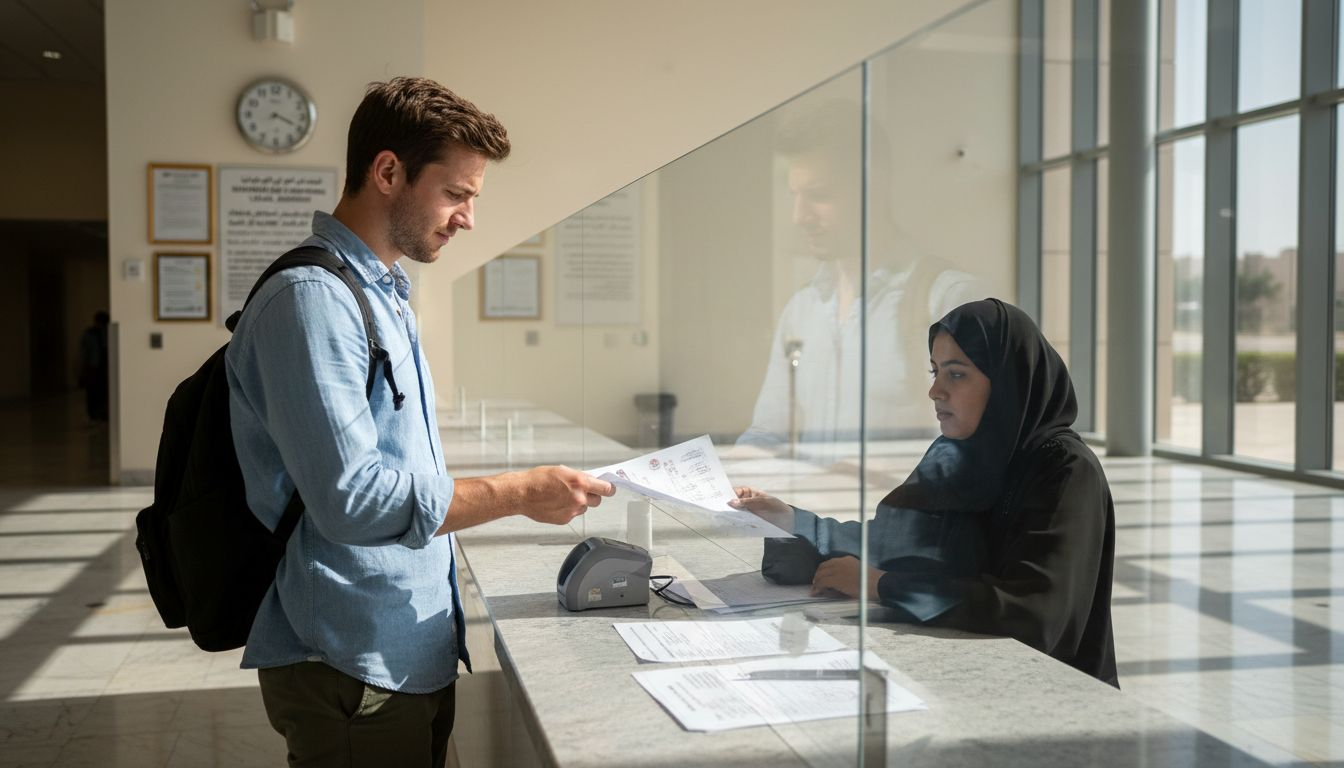
The embassy’s involvement extends beyond mere paperwork. They ensure that marriage certificates meet international standards, verify the legal capacity of individuals to marry, and provide no-objection certificates (NOCs) when required. This process helps prevent potential legal complications that could arise from improper marriage documentation.
Here is a summary of embassy roles across different marriage types in the UAE:
Marriage Type | Embassy Responsibilities | Typical Documents Required |
Islamic Marriage | Verify religious certificates, support translation | Religious certificate, passports |
Civil Marriage | Authenticate civil paperwork, provide NOCs | Civil certificate, residency proof |
Religious Minority Marriage | Consular support, legal capacity validation | Minority faith documentation |
International Marriage | Cross-border legal checks, translation | All foreign marriage documents |
Embassy certification transforms complex international marriage requirements into a navigable legal process for expatriate couples.
Pro tip: Contact your home country’s embassy well in advance of your marriage plans to understand the specific documentation and verification requirements for your unique situation.
Key Documents and Embassy Attestation Steps
Navigating the embassy attestation process requires careful preparation and understanding of the critical documentation needed for international marriages in the UAE. Expatriate couples must collect and authenticate a comprehensive set of legal papers to ensure their marriage is recognized both locally and internationally.
Key documents typically required for embassy attestation include:
Original birth certificates from the home country
Passport copies for both partners
Single status certificate or no-impediment letter
Divorce or death certificates (if previously married)
Valid passport-sized photographs
Proof of residence in the UAE
The marriage certificate attestation process involves multiple crucial steps. Embassies meticulously verify each document’s authenticity, ensuring they meet both UAE legal standards and international documentation requirements. This typically involves a multi-stage authentication process that includes notarization, translation, and official stamping.
Each embassy has specific procedural requirements, but the general attestation workflow remains consistent. Documents must first be authenticated by the issuing country’s relevant government department, then legalized by the UAE embassy in that country, and finally validated by the UAE Ministry of Foreign Affairs. This comprehensive verification ensures the legal integrity of international marriage documentation.
Embassy document attestation transforms personal papers into legally recognized international marriage credentials.
Pro tip: Collect and organize all required documents at least three months before your planned marriage date to avoid last-minute complications in the attestation process.
Legalization, Translation, and Validation Process
The journey of legalizing an international marriage in the UAE involves a complex, multi-step documentation transformation that ensures the complete legal recognition of foreign marriage certificates. Expatriate couples must navigate a precise sequence of verification, translation, and official validation to meet the UAE’s stringent legal requirements.
The legalization process typically involves several critical steps:
Embassy authentication of original documents
Certified Arabic translation of all marriage-related paperwork
Notarization by official government departments
Validation by the UAE Ministry of Foreign Affairs
Registration with local marriage authorities
Obtaining final marriage certificate
Marriage certificate translation represents a crucial element in the validation process. Certified translators must provide word-for-word translations that maintain the original document’s legal integrity, ensuring every detail is accurately conveyed in Arabic for official review.
Each stage of the process requires meticulous attention to detail. Documents must pass through multiple verification checkpoints, with each governmental entity carefully examining the paperwork’s authenticity. The UAE’s legal system demands comprehensive documentation that proves the marriage’s legal standing in both the originating country and within the Emirates’ jurisdiction.
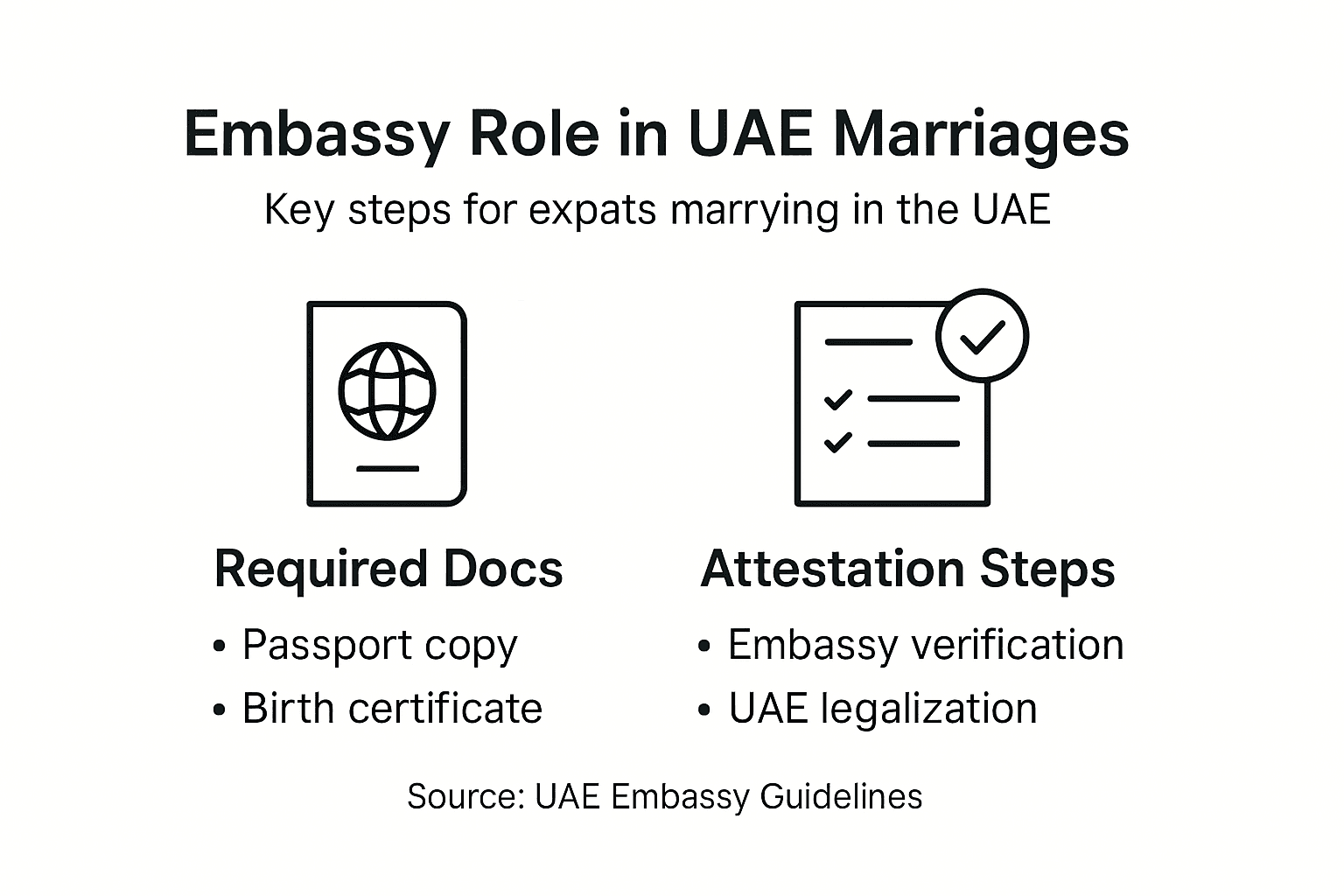
Compare key embassy attestation steps and their main purposes:
Step | Purpose | UAE Authority Involved |
Document Authentication | Verify legitimacy of originals | Embassy, Home Govt. Dept. |
Certified Translation | Ensure accurate Arabic version | Authorized Translators |
Notarization | Official government validation | Home Govt. Notary |
MOFA Validation | Final legal recognition in UAE | UAE Ministry of Foreign Affairs |
The legalization process transforms international marriage documents into legally recognized UAE credentials.
Pro tip: Engage a professional translation service specializing in UAE legal document certification to ensure 100% compliance with government requirements.
Mistakes to Avoid and Common Embassy Issues
Navigating embassy procedures for international marriages requires careful attention to detail and proactive preparation. Expatriate couples often encounter unexpected bureaucratic challenges that can significantly delay or potentially derail their marriage registration process in the UAE.
Common mistakes that can complicate embassy marriage documentation include:
Submitting incomplete or outdated personal documents
Failing to obtain proper no-objection certificates
Neglecting to have documents translated by certified translators
Misunderstanding specific embassy authentication requirements
Providing inconsistent information across different documents
Overlooking expiration dates on supporting paperwork
Marriage certificate processing demands meticulous verification of every document. Each embassy has unique procedural nuances that can trip up unprepared couples. For instance, some embassies require additional supporting documents or have specific formatting requirements that differ from standard international practices.
The complexity of embassy documentation increases with varying national regulations. Some countries have more stringent verification processes, requiring multiple layers of authentication. Expats must be prepared to navigate these intricate legal landscapes, understanding that each embassy may interpret documentation requirements slightly differently.
Bureaucratic precision can make the difference between a smooth marriage registration and a frustrating legal maze.
Pro tip: Create a comprehensive checklist of required documents and schedule a preliminary consultation with your embassy at least three months before your planned marriage date.
Simplify Your UAE Marriage Journey with Expert Embassy Support
Navigating embassy requirements for international marriages in the UAE can feel overwhelming with all the legal documentation, certifications, and translations involved. If you want to avoid delays, avoid submitting incomplete paperwork, and eliminate confusion about embassy authentication or no-objection certificates a trusted partner can make all the difference. Harris & Charms specializes in guiding expats through every step of the marriage attestation and legalization process ensuring your documents meet UAE standards and legal requirements.
Whether you face complex embassy procedures for Islamic, civil, or religious minority marriages or need help organizing your paperwork for smooth legalization, our personalized services bring peace of mind to your wedding journey. Benefit from professional document handling, certified translations, and seamless coordination with UAE authorities and embassies alike.
Ready to turn complicated embassy processes into a stress-free experience Visit Harris & Charms to learn how our expert team supports expatriates with legal documentation and celebration planning for UAE marriages.
Start your hassle-free marriage process today with trusted embassy assistance Visit our website now or contact us for a consultation and take the first step toward your legally recognized and beautifully planned UAE wedding. Explore more about how we ease marriage documentation challenges at Harris & Charms and prepare confidently for your special day.
Frequently Asked Questions
What is the role of an embassy in the marriage process for expatriates?
Embassies act as intermediaries by verifying and authenticating foreign marriage documents, ensuring their legal recognition within local laws.
What key documents are required for embassy attestation when getting married?
Typical documents include original birth certificates, passport copies, a single status certificate, divorce or death certificates (if applicable), and proof of residence.
How does the marriage certificate attestation process work?
The process involves several steps: authentication by the issuing country’s government, legalization by the UAE embassy, and final validation by the UAE Ministry of Foreign Affairs.
What are common mistakes to avoid when dealing with embassy procedures?
Common mistakes include submitting incomplete documents, failing to secure no-objection certificates, not using certified translators, and providing inconsistent information across documents.
Recommended
Comments